PLOT ELEMENT NOTES
This article explores the fundamental element of plot within literature, detailing its structure and components. It examines key plot elements, such as exposition, rising action, climax, falling action, and resolution, which shape the narrative arc. Additionally, it discusses the importance of conflict in driving the plot forward, including various types of conflict such as character vs. character and character vs. self. The role of suspense in engaging readers is also highlighted, demonstrating how it creates tension and intrigue in storytelling.

PLOT ELEMENT NOTES
E N D
Presentation Transcript
PLOT ELEMENT NOTES November 7, 2007
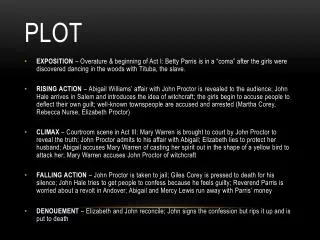
PLOT DIAGRAM Plot is the literary element that describes the structure of a story. It shows arrangement of events and actions within a story.
Plot Components Climax: the turning point, the most intense moment—either mentally or in action Rising Action: the series of conflicts and crisis in the story that lead to the climax (Suspense) Falling Action: all of the action which follows the climax Exposition: the start of the story, that introduces characters and setting. Resolution: the conclusion, the tying together of all of the threads
Plot: Conflict Conflict is the dramatic struggle between two forces in a story. Without conflict, there is no plot. These conflicts are often suspenseful.
Character vs Character Character vs Nature Character vs Society Character vs Self Plot: Types of Conflict Character vs Machine
Suspense in the Plot • One way authors keep readers interested in stories is to create a sense of suspense in the rising action. Suspense- is the quality of a short story, novel, play, or poem that makes the reader uncertain or tense about the outcome of events.