Download
1 / 15
150 likes | 276 Views
Bullying is a repetitive aggressive behavior aimed at gaining dominance over another person. Recognizing the signs of a child being bullied is crucial, such as torn clothing, bruises, and a loss of interest in academics. Bullying can manifest in various forms including verbal, social, and physical bullying, each with unique characteristics. The consequences can be severe for both the victim and the bully, leading to depression, anxiety, and other negative outcomes. It is essential for students, teachers, and parents to take action against bullying to create a safe environment.

E N D
Bullying By: Kim Novalick
What is bullying? • Repetitive aggressive or forceful behavior that helps gain dominance over another person
What are the signs? Child Being Bullied The Bully • Physical appearance: • Torn clothing • Damaged belongings • Marks on body from fighting: • Cuts, bruises, or scratches • Loses interest in academics • Loss of appetite • Gets angry easily • Doesn’t sympathize towards other children • Wants to be in charge of other children
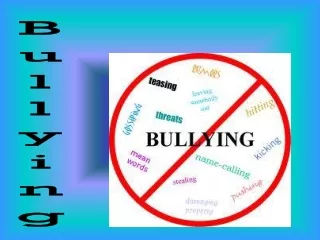
Types • Verbal • saying or writing mean things towards someone • Social • hurting someone’s relationships and reputation • Physical • hurting someone’s body or their personal belongings
Verbal Bullying • Teasing • making fun of someone by harassing, embarrassing, or humiliating them • Name-calling • using offensive names to insult someone • Inappropriate sexual comments • Threatening
Social Bullying • Excluding someone on purpose • Telling others not to like that person • Making up false things about a person • Embarrassing someone in front of others
Physical Bullying • Causing pain to someone’s body by: • Hitting • Pushing • Kicking • Spitting • Damaging someone else’s belongings
Effects Child Being Bullied The Bully • Depression • Anxiety • Low self-esteem • Decrease in academics • Suicidal thoughts • Sad • Lonely • Alcohol and substance abuse at early age • Abusive to loved ones later in life
When Witnessing Bullying • Who plays a role? • Students • Teachers • Parents and Guardians
Student • Assist • don’t start the bullying, but join in once it’s started • Reinforce • not directly involved but encourages the bullying by laughing • Outsider • see the bullying happening but doesn’t contribute or defend to it • Defender • step in a defend the child. Also offers support and comfort to the child being bullied
Teacher • Talk about bullying • Take immediate action • Create an anonymous survey to assess bullying in school • Encourage children to stay active • Be a good role model
Parents and Guardians • Talk with your children frequently • Make sure your child understands bullying • Be a good role model • Explain anti-bullying habits
STAMP out bullying • Stay away from bullies • Tell someone • Avoid bad situations • Make friends • Project confidence
TAKE THE PLEDGE • Cartoon Network wants everyone to take the pledge to never be a bully. You can visit this website to take the pledge yourself! • http://www.cartoonnetwork.com/promos/stopbullying/speakup/index.html
Resources • http://www.stopbullying.gov/what-is-bullying/definition/ • http://www.stopbullying.gov/kids/facts/ • http://www.stopbullying.gov/at-risk/effects/ • http://www.stopbullying.gov/what-is-bullying/roles-kids-play/index.html • http://en.wikipedia.org/wiki/Bullying • http://www.violencepreventionworks.org/public/bullying_warning_signs.page • http://www.edutopia.org/blog/bullying-prevention-tips-teachers-parents-anne-obrien • http://www.stopbullying.gov/prevention/at-school/assess-bullying/index.html • http://www.stampoutbullying.co.uk/