Download
1 / 3
30 likes | 133 Views
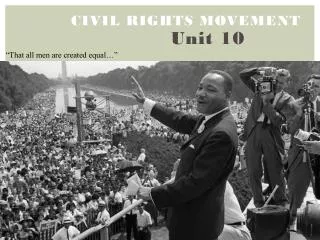
The Montgomery Bus Boycott began when Rosa Parks refused to give up her bus seat, leading to her arrest. This pivotal moment propelled Martin Luther King Jr., a young minister, to become a key leader in the boycott against segregated buses. Advocating for non-violence, inspired by Gandhi and Jesus, King organized protests through civil disobedience, including sit-ins and marches. Televised acts of Southern white brutality, such as the use of water hoses and police dogs, galvanized support from across the nation, particularly from Northern white college students.

E N D
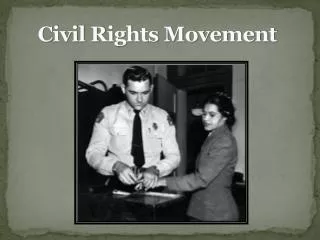
Montgomery Bus Boycott • Rosa Parks refused to give up her seat and move to the back of the bus • She was arrested. • Martin Luther King, Jr. a twenty-six year old minister become the leader of a bus boycott. • The bus companies ultimately relented
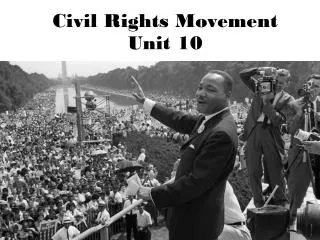
Martin Luther King, Jr. • Preached Non-Violence Gandhi, Jesus • Used civil disobedience: Sit-ins, boycotts and marches. • These protest were often on T.V. • The rest of the country saw the Southern White brutality: water hose and dogs. • Support began to develop in the North especially from white college students