Innovative Wheel Design for Versatile Use in Developing Regions
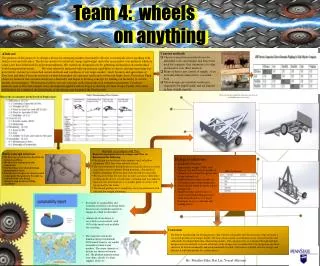
This project focuses on creating an adaptable wheel system that can be mounted on various objects, primarily aimed at improving logistics in developing countries. The design incorporates a wooden platform, rubber wheels, and a handle for ease of transport. By addressing customer needs, geographical challenges, and cost constraints, we developed a robust dolly that is stable and easy to maneuver. The choice of durable and maintainable materials ensures practicality and affordability for users with limited resources, fostering better transport solutions in third-world communities.

Innovative Wheel Design for Versatile Use in Developing Regions
E N D
Presentation Transcript
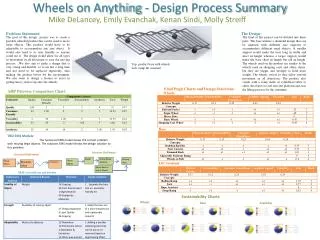
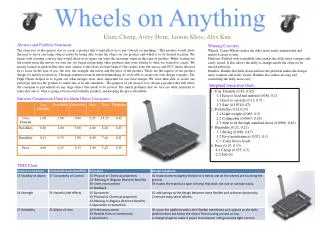
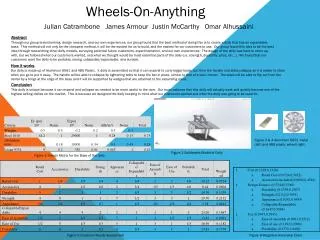
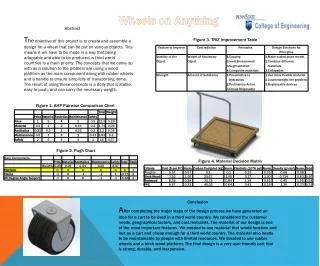
Wheels on Anything Figure 3. TRIZ Improvement Table • Abstract • Theobjective of this project is to create and assemble a design for a wheel that can be put on various objects. This means it will have to be made in a way that being adaptable and able to be produced in third world countries is a main priority. The concepts that we came up with as a solution to the problem are using a wood platform as the main component along with rubber wheels and a handle to ensure simplicity of transporting items. The result of using these concepts is a dolly that is stable, easy to push, and can carry the necessary weight. Figure 1. AHP Pairwise Comparison Chart Figure 2. Pugh Chart Figure 4. Material Decision Matrix Conclusion After completing the major steps of the design process we have generated an idea for a cart to be used in a third world country. We considered the customer needs, geographical factors, and cost restraints. The material of our design is one of the most important features. We needed to use material that would function and last as a cart and cheap enough for a third world country. The material also needs to be maintainable by people with limited resources. We decided to use rubber wheels and a birch wood platform. The final design is a very user friendly cart that is strong, durable, and inexpensive.