Download
1 / 15
150 likes | 271 Views
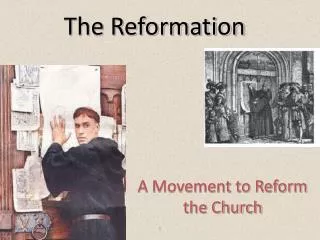
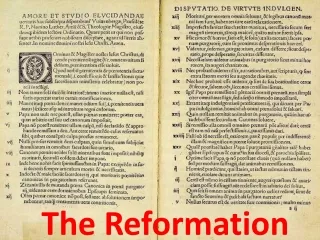
Throughout history, religion has been intertwined with politics and power. From the Reformation's challenges to the Catholic Church's authority to modern-day examples like religious-political movements, the influence of faith on governance is profound. The early reformers like Wycliffe and Hus highlighted clerical issues, igniting desires for social change rooted in Christian values. Figures like Erasmus promoted accessible scripture for all, while Martin Luther's "95 Theses" criticized ecclesiastical corruption. This course examines these connections, revealing the persistent relationship between religion and political power.

E N D
Throughout history, religion has not only been a religious issue. It has been intimately connected to politics and power. • Give some examples, either from this course or from modern day of connections between religion and politics.
Roots of the Reformation The Avignon Papacy 1309-1389 Great Schism
Early Reformers Wycliff - Lollards Jan Hus
The Northern Renaissance: Prelude to the Reformation • Last quarter of the 15th Century • More Christian & stressed social reform based on Christian values • Combined the best of classical & Christian cultures • Education the key to social & moral reform
Sir Thomas More 1478-1535 Utopia
Erasmus (1466 - 1536) ‘Prince of the Humanists’
Erasmus, Preface to New Testament • For I utterly dissent from those who are unwilling that the sacred Scriptures should be read by the unlearned translated into their vulgar tongue, as though Christ had taught such subtleties that they can scarcely be understood even by a few theologians… • Christ wished his mysteries to be published as openly as possible.
Clerical Problems • Immorality • Ignorance • Absenteeism/ • Pluralism
Indulgences: pardoning of sins for a price The Master Salesman
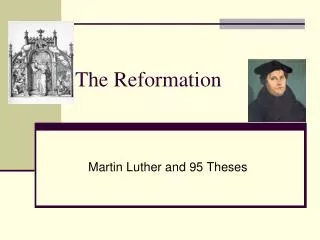
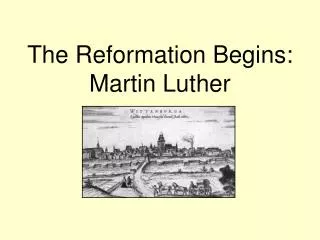
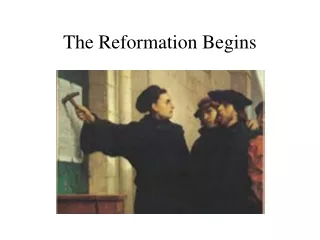
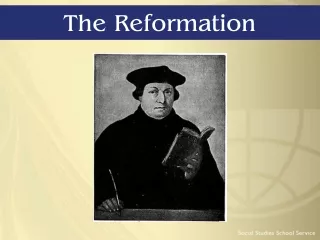
Martin Luther 1483-1546
Pope Leo X 1475 - 1521 Member of Medici Family