Download
1 / 5
50 likes | 168 Views
Strategy and Methodology: Liberation Tigers of Tamil Eelam (LTTE). Violence Military Operations Strength & Training Public Attacks. Assassinations & Guerilla Strategy. People’s War (1972) Political figures & Presidents Prime Minister Rajiv Ghandi 1991 S.L. President Premadasa 1993.

E N D
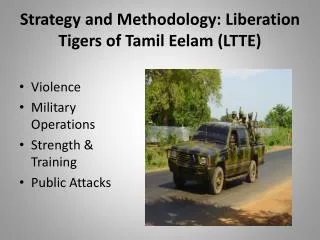
Strategy and Methodology: Liberation Tigers of Tamil Eelam (LTTE) • Violence • Military Operations • Strength & Training • Public Attacks
Assassinations & Guerilla Strategy People’s War (1972) Political figures & Presidents Prime Minister Rajiv Ghandi 1991 S.L. President Premadasa 1993
Suicide Bombings & Women in LTTE • Suicide Belt • Female Soldiers and Suicide Bombers
Negotiations & Peace Agreements • Why did they always fail? • Why did the LTTE even participate ?
End Results • Propaganda and Violence Fail • May 2009 • Banned and deemed illegal