Download
1 / 8
80 likes | 188 Views
This learning module explores the historical trends of global trade and the effects of globalization on societies at various development levels. Students will identify historic trade routes, such as the Silk Road, and analyze how globalization has influenced economies and cultures throughout history, from the export of goods like silk and gunpowder from China to modern trade patterns involving massive container ships. The course addresses concerns about economic, environmental, and social impacts of free trade zones and changing trade dynamics.

E N D
Globalization and Global Trade PatternsLearning Goal 4: Compare global trade patterns over time and examine how globalization has affected societies at different levels of development. • Criteria for Success • Identify historic trade routes • Understand the connection between globalization and development
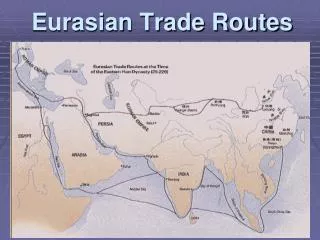
NO!!! Global History of China silk exported from China to the Mediterranean tea, porcelain exported from China to Europe gunpowder travels from China to Europe manufactured goods exported from China 500’s 1300’s 1800’s 1900’s China has always been a part of globalization of markets!!!!
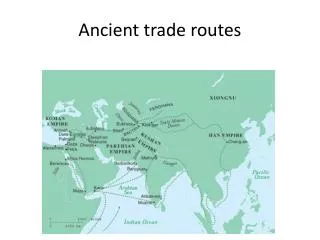
Middle East- The worlds Crossroad • The Middle East stands at the crossroads of three continents: Africa, Asia and Europe. Since ancient times it has developed major trade routes over land and sea
What is blue, a quarter of a mile long, and taller than London's Olympic stadium? The newest container ship, the Triple E Large volumes of goods are produced in Asia and then consumed in Europe and the US. Many worry these giant ships are symbols of the world's trade imbalance
Changing Trade Patterns (Impacts): ECONOMIC ENVIRONMENTAL SOCIAL
Free Trade Zones Due to increased global interactions free trade zones have become more common • FTZ- a designated area that eliminates traditional trade barriers, such as tariffs, and minimizes bureaucratic regulations
Medical Advancements(Impacts): ECONOMIC ENVIRONMENTAL SOCIAL