Cholinergic Receptors
480 likes | 937 Views
Explore the types of cholinergic receptors, their subtypes, activation, drugs, and clinical uses. Learn about muscarinic and nicotinic receptors, agonists, blockers, and their effects on various body systems.


Cholinergic Receptors
E N D
Presentation Transcript
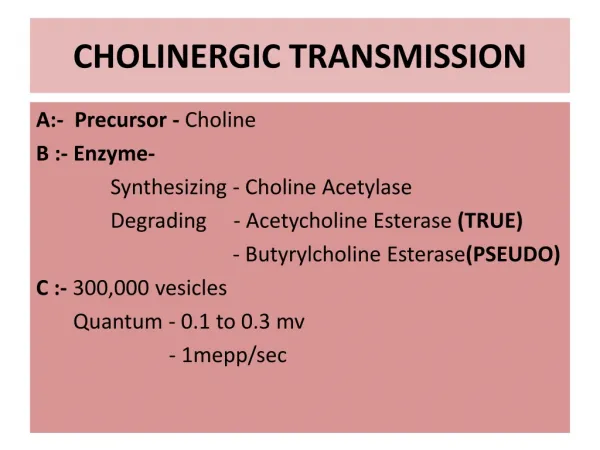
Cholinergic Receptors: Types • Muscarinic receptors • Nicotinic receptors Based on selective activation and antagonism.
g d a a b Receptors and signal transduction in the ANS: Nicotinic Receptors
Receptors and signal transduction in the ANS Cholinergic Receptors Nicotinic Muscarinic M1 M3 M5 M2 M4
Receptors and signal transduction in the ANS: Muscarinic receptors are 7 transmembrane domain, G-protein coupled receptors
Receptors and signal transduction in the ANS: Muscarinic receptors(M1, M3, M5) NH 3 Phospho - (+) G lipase C q PIP 2 IP Diacylglycerol COOH 3 2+ Increase Ca Activate Protein Kinase C Response
Receptors and signal transduction in the ANS: Muscarinic Receptors (M2 and M4)
Cholinergic agonists • Two (2) types • Direct – • occupy and activate receptors • Indirect • inhibit acetylcholinesterase • levels of Ach increase • Ach stimulates receptors
Esters of Choline • hydrophilic • differ in breakdown by Ach’esterase • acetylcholine - very susceptable • methacholine - 3X less susceptible • bethanechol - not susceptible • methacholine & bethanechol • longer duration of action than Ach • mostly activate muscarinic receptors
Direct • Esters of choline – mostly activate muscarinic receptors • methacholine • bethanechol • Alkaloids – activate both muscarinic and nicotinic receptors • pilocarpine • nicotine
Alkaloids(pilocarpine and nicotine) • Highly lipid soluble • well absorbed from GI tract • get into brain • Capable of both muscarinic and nicotinic receptor activation
Eye • pupillary sphincter muscle contraction (miosis) • ciliary muscle contraction • opens drainage canals in anterior chamber • lowers intraocular pressure • lens thickens for near vision
CV Effects • Direct effects on heart • decreased SA and AV conduction velocity • decreased force of atrial contraction • Reduced vascular resistance – • activation of receptors on endothelium • generation of nitric oxide (NO) • NO causes vascular muscle relaxation • Effects on BP modified by reflexes
Cardiac Conduction - Ach • Increased K+ conduction – slows conduction • SA node • AV node • Decreased inward Ca++ current – reduces force of contraction • Slowed pacemaker rate opposed by reflexes • Ventricles are less directly affected (parasympathetic innervation of ventricles much less than atria)
Respiratory Effects • bronchial smooth muscle contraction • respiratory gland secretion • asthmatics highly sensitive
GI Effects • Increased secretion • gastric glands • salivary glands • Increased motility - diarrhea
Cholinergic receptors in the brain • Brain has muscarinic receptors • Esters don’t penetrate • Alkaloids penetrate well • Brainstem and spinal cord contain nicotinic receptors • Mild alerting from smoking • Seizures in overdose
Clinical Uses of Cholinergic Agonists • Glaucoma – physostigmine once used • GI and urinary stimulation - bethanechol • myasthenia gravis • edrophonium for diagnosis or testing • pyridostigmine for treatment
SLUDGE: Toxicity • Salivation • Lacrimation • Urination • Defecation • Gastric Emptying
More selective than agonists; may block muscarinic or nicotinic receptors selectively Cholinergic Blockers
Cholinergic Blockers • muscarinic blockers - very useful in medicine • ganglionic blockers - not used much • neuromuscular blockers - used for skeletal muscle relaxation in surgery
Antimuscarinic Drugs • alkaloids – naturally occurring • atropine • scopolamine • tertiary amines • dicyclomine • benztropine • quaternary amines - ipratropium
Antimuscarinic Drugs • tertiary amines & alkaloids • lipid soluble • good absorption from mucous membranes and skin • penetration into brain • wide distribution e.g. brain & periphery • highly selective for muscarinic receptor • quaternary amines - opposite of above
Antimuscarinic Drugs • alkaloids – naturally occurring • atropine • scopolamine • tertiary amines • dicyclomine • benztropine • quaternary amines - ipratropium
Atropine & Scopolamine • plant origin • atropine - Atropa belladonna • scopolamine - Hyoscyamus niger • well absorbed from mucous membranes or skin • competes with Ach for muscarinic receptors • organs differ in sensitivity to these drugs
Atropine • most sensitive • salivary glands • bronchial glands • sweat glands • intermediate sensitivity - heart tissues • least sensitive - parietal cells • highly selective for muscarinic receptors
Atropine - CNS • sedation in therapeutic doses • hallucinations in toxic doses • bradycardia when given parenterally • antimotion sickness effects • antiparkinsonism effects
Atropine - Eye • relaxes pupillary sphincter muscle • unopposed sympathetic effects • mydriasis or dilation • paralysis of the ciliary muscle - cycloplegia • reduction in lacrimal secretion - dry eye
AtropineHeart & Cardiovascular System • initial bradycardia - central effect (?) • tachycardia due to blockade of vagal slowing • Opposes ach effects on SA depolarization • Opposes ach effects on AV conduction • ventricles are less affected • overall - little affect on BP
Atropine • respiratory tract • some bronchodilation • reduction of respiratory secretions • a quaternary drug (Ipatropium) is given as an aerosol to patients with asthma • genitourinary tract - ureter and bladder relaxation • sweat glands - suppressed by atropine
Atropine • dry mouth • slight, if any, decrease in gastric secretion • GI motility decreased • decreased gastric emptying • constipation
Atropine Poisoning • dry as a bone • blind as a bat • red as a beet • very dangerous in children - hyperpyrexia
Therapeutic Uses • antiparkinsonism effects • motion sickness - scopolamine given via transdermal patch • eye examinations - usually something short-acting (e.g. phenylephrine) is used rather than atropine • asthma - ipatropium aerosol • insecticide poisoning