Geography and Civilization of Ancient India: Mountains, Plains, and River Systems
India, classified as a subcontinent, boasts diverse geography marked by the northern Himalayan and Hindu Kush mountain ranges that isolated it from other cultures. Its three major regions include the fertile Gangetic Plain, the dry Deccan Plateau, and the lush Coastal Plains. Monsoons drive the agricultural cycle, vital for crop success. The Indus Valley Civilization, known for advanced urban planning and polytheistic beliefs, thrived thanks to agriculture and trade. Despite its achievements, the civilization faced decline due to environmental changes, leaving many mysteries about its past.

Geography and Civilization of Ancient India: Mountains, Plains, and River Systems
E N D
Presentation Transcript
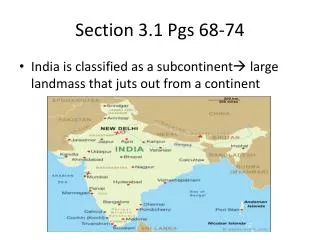
Section 3.1 Pgs 68-74 • India is classified as a subcontinent large landmass that juts out from a continent
Geography of India • Snow covered mountain ranges mark the northern border • Hindu Kush and Himalayas • These mountain ranges isolated India from other people and cultures
Natural Features Define Regions • India is divided into three major zones: • Gangetic Plain in the North • Deccan Plateau • Coastal Plains
The Gangetic Plain • Located south of the Himalayas • Very fertile region • Indus Rives, Ganges, and the Brahmaputra • These rivers carry melting snow from the mountains to the plains…important why?
Ancient India and China Chapter 3
The Deccan Plateau • Plateau raised area of level land • Lacks the melting snow • Very dry area, not good for agricultural use
Coastal Plains • Coastal plains are separated from the Deccan plateau by the Eastern and Western Ghats (Mountain ranges) • Very wet climate contains rivers and seasonal rains • Access to the sea for fishing and trade
Monsoons • Very common in India • Seasonal winds that regularly blow from a certain direction for part of the year
Monsoons Shape Indian Life • Monsoons are welcome because they bring rains that are needed for crops • If the rains are late, starving and famine can occur • If they are too strong, deadly floods are possible
Indus Civilizations • Have not found any record of Kings and Queens • No tax records, literature, etc • We know they existed, just don’t know many specifics about them
Harappa and Mohenjo-Daro • Considered possible twin capitals • Both were large • Both contained massive hilltop structures
Carefully Planned • Mohenjo-Daro was laid out in a very organized pattern • Houses made of baked clay bricks • Contained plumbing systems that led to sewers beneath the streets
Making a Living • Most people were farmers • May have been the first to grow cotton and weave into cloth • Also traders, sailed up Persian Gulf and reached Sumer • Might have learned writing system from Sumer
Religious Beliefs • Polytheistic • Believed in the mother goddess • Also viewed certain animals as sacred, such as the buffalo and bull • Veneration special regard for cattle
Indus Civilization Declines • Don’t know for sure what may have happened • Suggested that damage to the environment played a role • Too many trees cut down? • Flood? river mud found in streets • Earthquake?