Atomic Structure
The term "atom," derived from the Greek word for "indivisible," refers to the smallest part of an element, which cannot be further divided by ordinary chemical means. Atoms are composed of three main particles: protons (positive charge), neutrons (neutral), and electrons (negative charge). The balance between protons and electrons is crucial, as like charges repel while opposite charges attract. While the planetary model depicts atoms similarly to mini solar systems, the more accurate orbital model of atomic structure effectively predicts chemical behavior in modern science.

Atomic Structure
E N D
Presentation Transcript
Atomic Structure Max, Justin, Amy
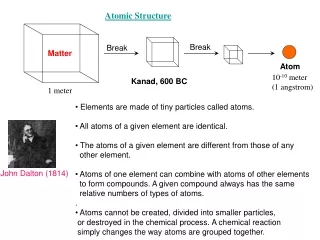
Atom • The word atom comes from the Greek word meaning “incapable of being divided.” • The definition of atom is: the smallest part of an element; indivisible by ordinary chemical means.
Parts of the Atom • Protons: Have a positive charge. + • Neutrons: Uncharged or neutral. +- • Electrons: Have a negative charge. – • Protons and electrons are equal in strength, and must be balanced. • Atoms with same charge repel, with opposite charge attract.
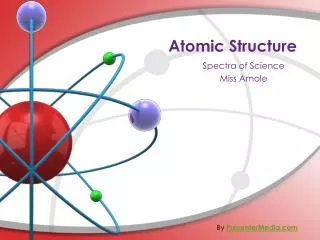
Planetary Model of an Atom • The planetary model of an atom portrays the atom as a miniature solar system in which the protons and neutrons are clustered at the center of the atom in the atomic nucleus.
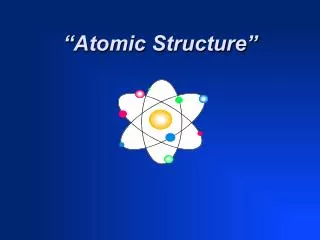
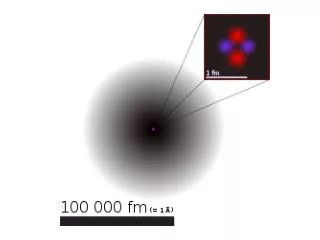
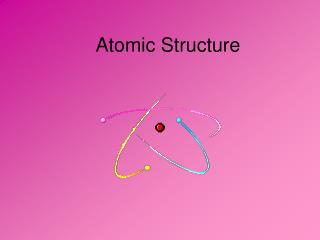
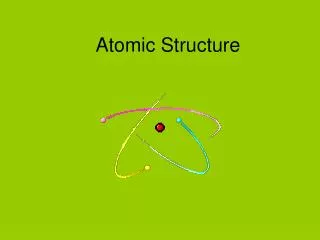
Orbital Model of an Atom • This modern model of atomic structure, called the orbital model, has proved to be more useful in predicting the chemical behavior of atoms.
Citations • Marieb, Elaine. “Atomic Structure.” Essentials of Human Anatomy & Physiology. SerinaBeauparlant. 8th Edition. San Francisco. Pearson Benjamin Cummings. 2006. 29-30. Print. • “Stock Photography: Orbital model of atom.” Dreamstime. 22 August 2013. Web. http://www.dreamstime.com/stock- photography-orbital-model-atom- image10634382