A Comprehensive Guide to Becoming a Counsellor or Psychotherapist
This training outline offers a thorough introduction to counselling and psychotherapy, covering essential theories and practical aspects. Training is available through diverse providers, including independent organizations, charities, and educational institutions, often structured part-time over 3 years. Courses may include personal therapy and require supervised client hours. Accreditation is vital, either through educational institutions or professional bodies such as BACP. Aspiring psychotherapists can pursue specialized training affiliated with UKCP colleges, typically lasting 3-4 years with mandatory placements.

A Comprehensive Guide to Becoming a Counsellor or Psychotherapist
E N D
Presentation Transcript
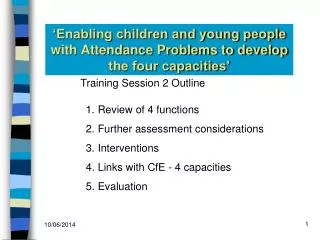
Training Outline To Become a Counsellor or Psychotherapist An Introduction to Counselling and Psychotherapy: From Theory to Practice
Becoming a Counsellor • Training can be located in a variety of contexts: • Independent providers • Charities and voluntary organisations • Further education • Higher education • Online • Most training is part-time (an evening per week, or over several weekends per academic year) • Training typically lasts 3 years, overall • Traditionally training structured across an Introduction, Skillsand then a Diploma training (non-graduate). Increasingly training at undergraduate level (as an undergraduate degree) or post-graduate level (at PG Diploma or Masters)
Becoming a Counsellor • Many courses will require some attendance for personal therapy • Requirement for supervised hours with clients on placement • Important to be clear who is awarding the qualification: • In higher education likely to be awarded by the institution itself (e.g., from the University of Wherever) • In further education likely to be awarded by a specific awarding body (e.g., ABC, CPCAB) • Voluntary sector and independent providers likely to be awarded either by specific awarding body (as above), or by themselves (e.g., A Whoever Diploma) • Many courses are additionally accredited by a professional body (e.g., BACP, COSCA) • All training providers have advantages/disadvantages (e.g., smaller providers = intimacy; larger providers = more resources such as library)
Becoming a Psychotherapist • Psychotherapy training affiliated to one of the UKCP colleges: • Council of Psychoanalysis and Jungian Analysis College • Humanistic and Integrative Psychotherapy College • College for Sexual and Relationship Therapists • College for Family, Couple and Systemic Therapists • College of Hypno-Psychotherapist • College of Constructivist Psychotherapies • Cognitive Psychotherapies College • Psychotherapeutic Counselling and Intersubjective Psychotherapy College • University Training College • College of Medical Psychotherapists
Becoming a Psychotherapist • Training is typically part-time, usually structured over 2-3 day blocks, or weekends throughout the academic year • To become registered with UKCP, it is important to undertake training with an organisation who is a member of a UKCP college • Training usually runs for 3-4 years, sometimes longer • For many courses it is a requirement for ongoing personal therapy for the duration of training • For many courses a requirement for a mental health placement during the course • Requirement for supervised hours with clients on placement