Download
1 / 24
240 likes | 354 Views
Race and the Age of Exploration. Both are French. Both are Egyptian. D ifferences can exist within a population as much as between populations. Both are French. Same “race”?. Both are Egyptian. Same “race”?. Germany. Czech Rep. Germany. Czech Rep. Hungary. Germany. Czech Rep.

E N D
Both are French. Both are Egyptian.
Differences can exist within a population as much as between populations. Both are French. Same “race”? Both are Egyptian. Same “race”?
Czech Rep Germany
Czech Rep Hungary Germany
Czech Rep Hungary Serbia Germany
Czech Rep Hungary Serbia Albania Germany
Czech Rep Hungary Serbia Albania Greece Germany
Czech Rep Hungary Serbia Albania Greece Germany When there are differences, they are gradual.
Czech Rep Hungary Serbia Albania Greece Germany When there are differences, they are gradual.
France Spain
France Italy Spain
France Italy Turkey Spain
France Italy Turkey Lebanon Spain
France Italy Turkey Lebanon Egypt Spain
France Italy Turkey Lebanon Egypt Spain In a given region, differences can be slight or nonexistent.
France Italy Turkey Lebanon Egypt Spain In a given region, differences can be slight or nonexistent.
Then, differences in physical characteristics were extreme rather than gradual.
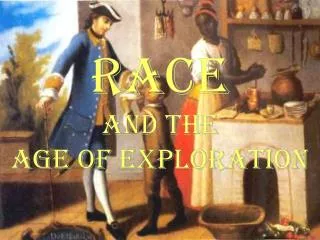
RACE and the Age of Exploration • However, intermarriage between natives and Europeans early in colonialism (15th-17th C) suggests that a race concept was not fully formed.