Radical Reconstruction
This section explores Radical Reconstruction following the Civil War, focusing on President Johnson's plan, Southern state responses, and the enactment of the 13th and 14th Amendments. It discusses the unsettling return of former Confederates to power, the rise of Black Codes, and the violence faced by African Americans. The article highlights Congress's response, the establishment of the Freedmen's Bureau, and the struggles of newly freed slaves. It also addresses women's rights issues at the time, demonstrating the complexities of social justice and political change.

Radical Reconstruction
E N D
Presentation Transcript
Radical Reconstruction Think Back to the last section - What did Johnson’s Plan state? What did southern states have to do? • Approve the 13th Amendment – banning slavery • Write new Constitutions • Hold elections
New Southern members of Congress Northerners alarmed! Southerners voted former leaders of the Confederacy!! Including the former VP of the confederacy. (Alexander Hamilton Stephens from Georgia)
Southern Reaction, Northern Response Serve on juries, own guns, gather in groups after dark, only do certain jobs. Black codes Ex-confederates elected to state and local offices Violence towards African Americans Congress passes the Civil Rights Act of 1866 Protects voting and equal protection
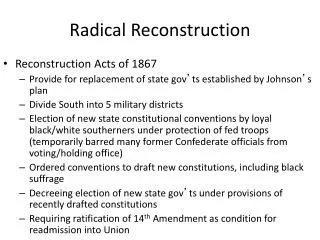
The Radical’s Plan • The Reconstruction Act • South divided into 5 military districts • New constitutions • African American MEN could vote • Male citizens equal rights • Pass the 14th Amendment (defines what a citizen is)
Impeaching the President • Evidence found to impeach President Johnson • 2/3 needed to convict. One vote shy. • Acquitted • Power to follow through with Reconstruction is now in Congress’ hands. Impeach = to charge an elected official with a crime
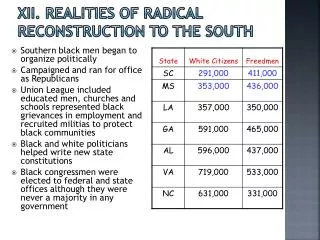
African Americans and Reconstruction What should happen with the newly freed slaves? What do they need? Needed food, shelter, clothing, a way to earn a living, education. African Americans became sharecroppers. Signed contracts with white landowners to work for pay in return for a share of the crop – never out of debt. Freedmen’s Bureau Land Give former plantation land to freed slaves. Too radical did not happen. Provided food, clothing, medical care, arranged for work, built schools
Cycle of Poverty Top half Left side
New Amendments bottom half Left side
No Votes for Women • Women put aside their fight for the right to vote. • Joined the fight to end slavery. • Women expected the vote for their hard work • It did not happen.