Understanding Biodiversity: Importance, Value, and Threats to Life on Earth
This official video commemorates the International Year of Biodiversity 2010, exploring the rich variety of life on Earth, encompassing wild and domesticated species, their genetic diversity, and the ecosystems they inhabit. It highlights the instrumental and intrinsic values of wild species, emphasizing ecosystem sustainability, agriculture, medicine, recreation, and ecotourism. The video addresses the decline of biodiversity due to habitat loss, pollution, exotic species introduction, and overconsumption, while estimating the unknown diversity of life that exists.


Understanding Biodiversity: Importance, Value, and Threats to Life on Earth
E N D
Presentation Transcript
Official video of the International Year of Biodiversity 2010 [www.keepvid.com].mp4
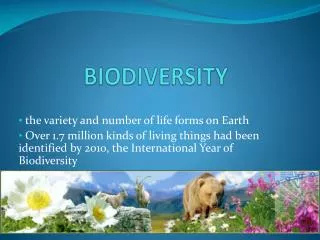
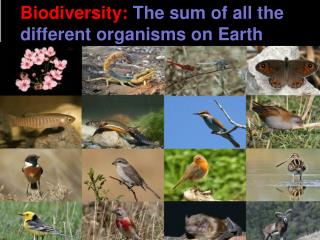
What is biodiversity? • The variety of life on Earth • Includes wild and domesticated species, diversity of their genes, and the variety of ecosystems
Value of Wild Species • Instrumental value: a species of individuals organisms existence is beneficial (usually to humans) • Intrinsic value: a species or individual has value for its own sake, it does not need to be useful to us
Instrumental value • Ecosystem sustainability • Source of agriculture, forestry, aquaculture • Source of medicine • Recreational value • Aesthetic value • Scientific value • Commercial value – ecotourism
Intrinsic Value • Do species other than humans have inherent rights? • Organisms with no obvious value to humans have existed for thousands or millions of years and represent a unique set of biological characteristics
Decline of Biodiversity • Physical alteration of habitat (36%) • Exotic species introduction (39%) • Overuse (23%) • The Population factor • Pollution
How many species are there? • We have identified almost 2 million • Estimates are from 5 million to 100 million • Why don’t we know? • We have identified most organisms larger than a fly • Most work has been done in the developed world, but there are biodiversity hotspots • Recently discovered new species
Biodiversity Loss • Habitat Loss • Introduced species • Pollution • Population Growth • Over-consumption
Habitat Loss • Conversion • Natural areas are converted into farms, subdivisions, … • Fragmentation • Natural areas usually have large patches of land well connected to other patches • Simplification • Removing debris, managing forests for one species, channelization of streams
Introduced Species • Introduced, or exotic species, are not native to the area and have been deliberately or accidentally transported by human activity
Zebra Mussel Competes for food Hinders native clams Alters water clarity
Brown-headed cowbird Competes for food Nest parasite Harmful to neotropical migrants
European Starling Competes for food Competes for nesting holes, affecting native woodpeckers
Pollution • Creation of “dead zones” • Oil spills • Chemicals (ex. DDT) • Acid Deposition • Global Warming
Overuse/Overconsumption • Killing individuals of a particular species faster than they can reproduce will lead to the ultimate extinction of the species • Hunting • Trafficking in wildlife and products • Consumers • Exotic pet • Poor management of forests and woodlands