The Attack on Pearl Harbor: Japan's Strategic Assault on December 7, 1941
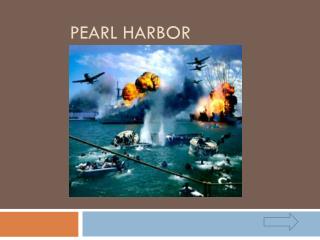
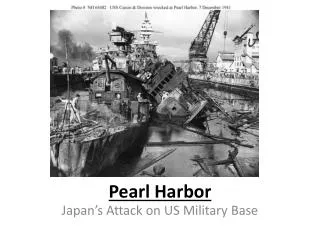
On December 7, 1941, Japan launched a surprise attack on Pearl Harbor, a crucial U.S. military base in Hawaii. This assault, executed with 360 aircraft in a blitzkrieg style, resulted in the deaths of 2,500 Americans and injuries to over 1,200 more. It marked a pivotal moment in World War II, as Japan aimed to eliminate the U.S. Pacific Fleet and secure dominance in East Asia. Prior to the attack, tensions had escalated due to Japan's aggressive expansion and the U.S. embargo on supplies. The event galvanized American support for entering the war against the Axis Powers.

The Attack on Pearl Harbor: Japan's Strategic Assault on December 7, 1941
E N D
Presentation Transcript
Pearl Harbor Japan’s Attack on US Military Base
In 1931, the Japanese Army attacked Chinese troops in Manchuria • This was an attempt by the Japanese Empire to eventually gain all of East Asia. The Japanese wanted to compete in a struggle for power with the United States, the Soviet Union, and many of European countries that had goals to expand their empires into Asia. The invasion of Manchuria attempted to create a strong empire, which could eventual compete with these "world powers “.
US President F.D. Roosevelt knew the war wasn’t going well for the allies, but Americans supported their “isolationist” approach.
In order to enter the war, he needed a reason. • During this time, the U.S. supplied many natural resources to Japan (iron, steel, military equipment). General Hideki Tojo – Leader of Japan Allied with the Axis Powers – Germany and Italy (The Enemies)
FDR cut off all shipments to Japan to slow them down (because Japan invades part of China). Japan threatens to attack if the shipments did not continue. • Japan decided to attack Pearl Harbor, the U.S. navy base located in Hawaii. This would then allow them to take over all surrounding countries without U.S. involvement in the Pacific.
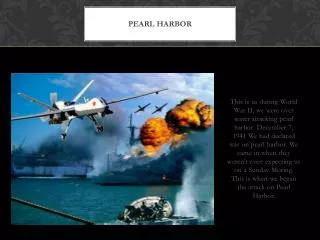
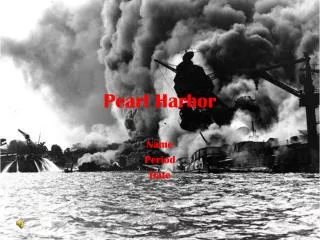
On Dec 7, 1941, Japan attached by air using 360 planes in a blitzkrieg style. • 2500 Americans killed, 1200 injured, 3 destroyers sunk and all planes destroyed.