Best practices for technology selection
Selecting the right technology is crucial for success. Begin by inviting stakeholders and clearly defining technology needs and goals. Establish criteria that encompass both immediate and long-term requirements. Develop a detailed RFP and encourage vendor participation. Ensure the evaluation process is transparent and involves independent experts and current users of the technology. While cost is important, it shouldn't be the sole factor; focus on value and be prepared to invest in the best solution to avoid future replacements. Follow these best practices to enhance technology selection effectiveness.

Best practices for technology selection
E N D
Presentation Transcript
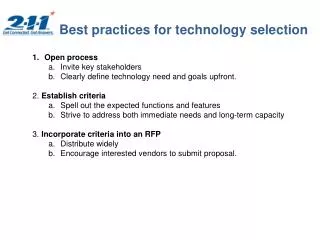
Open process • Invite key stakeholders • Clearly define technology need and goals upfront. • 2. Establish criteria • Spell out the expected functions and features • Strive to address both immediate needs and long-term capacity • 3. Incorporate criteria into an RFP • Distribute widely • Encourage interested vendors to submit proposal. Best practices for technology selection
4. Review process should be transparent and inclusive • Several stages of independent review and evaluation • Technical experts • Current users of the proposed solution • Key stakeholders who will work with new solution, e.g. I&R specialists, supervisors • 5. Finances and Cost • Don’t let cost be the sole driver. • Don’t share cost information during the evaluation stage in determining • Be willing to stretch if necessary to buy the best solution • There have been several examples of 2-1-1s implementing the least expensive software or phone system, only to have to replace it down the road. Best practices for technology selection