The Civil Rights Movement: Struggles and Achievements (1954-1969)
The Civil Rights Movement emerged in response to systemic racism and the denial of rights to minorities in America, particularly African Americans. It included influential events like the Montgomery Bus Boycott and the sit-in movement. Landmark rulings such as Brown v. Board of Education declared segregation unconstitutional. The movement was further propelled by leaders like Martin Luther King Jr. and Malcolm X, advocating for equality, voting rights, and social justice. Despite significant achievements by 1965, such as the Voting Rights Act, challenges such as poverty and racism persist.

The Civil Rights Movement: Struggles and Achievements (1954-1969)
E N D
Presentation Transcript
The Movement Begins 1954-1957
I. Why CRM was needed • Minorities were being denied rights • Voting (literacy tests/poll taxes/registration) • De Facto/De Jure segregation (lawful/traditional) • Legal rights • Focus was in the South, but discrimination and denial of rights were happening everywhere • Included all minorities (Hispanic, Asian, Native American) but led mostly by African American leaders. • Cold War played a part U.S. an example for world to follow?
II. Origins • A. 14th Amendment (1868): Equal protection • B. Plessy vs. Ferguson (1896): separate but equal • C. Court Challenges Begin • 1. NAACP
D. New Political Power • 1. Great Migration • 2. Voted Democrat • E. Push for Desegregation • 1. CORE (Congress of Racial Equality) • 2. Sit-ins
III. Civil Rights Movement Begins • A. Brown vs. Board of Education (1954) • 1. Thurgood Marshall, lawyer • 2. Topeka, Kansas, Public Schools • 3. Segregation in pub schools unconstitutional • B. Southern Manifesto • 1. Opposition to integration • 2. 101 Southern members of Congress • 3. Encouraged southerners to defy • decision in Brown v. Board
C. Montgomery Bus Boycott (Dec. ’55-Dec. 56) • 1. Rosa Parks • 2. Martin Luther King: made leader of • Montgomery Improvement Assoc. • 3. Non-violent civil disobedience • 4. Boycott lasted over a year (381 days) • a. Ended with Parks decision
IV. Eisenhower and Civil Rights • A. Mixed Feelings • 1. Anti-Segregation, but didn’t want to force • B. Crisis in Little Rock (1957) • 1. Central High: admit 9 black students • 2. National Guard • a. called by governor • to prevent students • from entering • 3. U.S. Army called in to • uphold desegregation
Challenging Segregation 1960-1966
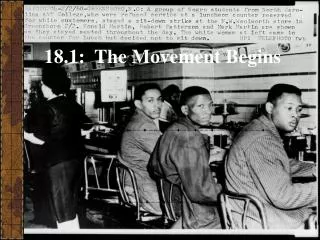
I. Sit-in Movement • A. Started in Greensboro, N.C. • 1. 4 students at Woolworth’s lunch counter • 2. Refused service, wouldn’t leave • 3. Movement grew across country • 4. non-violent, even when attacked • 5. Leads to SNCC
II. Freedom Riders (May ’61) • A. Protest interstate bus segregation • B. Birmingham, Ala. • 1. Mob beats Freedom Riders • 2. No police at bus station • 3. Bull Connor: I gave cops day off for • Mother’s Day. • a. Really asked KKK to • beat them
III. JFK and Civil Rights • A. Black vote crucial to his election • 1. Backed off support though • a. Needed Southern Senators support • 2. 40 AAs to high-ranking gov’t jobs • 3. CEEO: no discrimination in hiring or • promoting people for Fed jobs.
B. James Meredith • 1. Transferred to U. of Mississippi (‘62) • 2. Angry mobs started riot • 3. JFK has to send in troops • 4. Meredith attended with Fed bodyguards
C. Violence in Birmingham (spring ’63) • 1. MLK led demonstrations: try to • force JFK to take stand • 2. “Letter From a Birmingham Jail” • 3. Bull Connor ordered police beatings • a. televised • 4. JFK orders prepping of new Civil Rights bill
IV. Announcing CRA of 1964 • A. JFK needed something to happen • B. George Wallace: Alabama governor • 1. blocked admissions office at ‘Bama • (6/11/1963) • C. Medgar Evers: activist murdered next day • D. Kennedy announces Civil Rights Act • E. March on Washington (Aug. 28, 1963) • 1. 200,000 demonstrators • 2. “I have a dream” Evers
F. CRA ‘64 becomes law • 1. Outlawed discrimination • 2. Equal Opportunity Employment
V. Struggle for Voting Rights • A. Selma march • 1. Black majority/only 3% registered • 2. “March for Freedom” • a. Selma to Montgomery • 3. police beat praying demonstrators
B. Voting Rights Act of 1965 • 1. Federal officials register votes • 2. No literacy tests
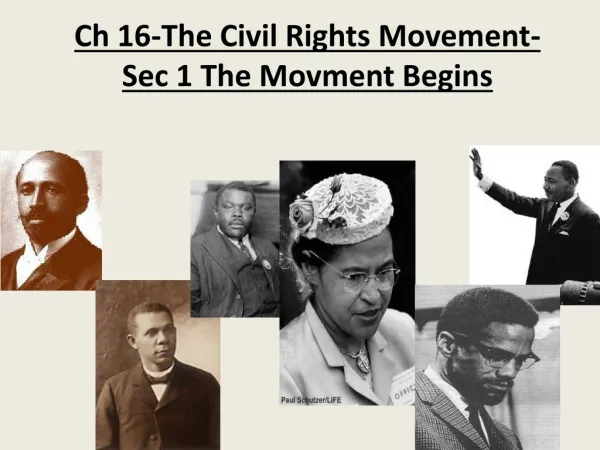
New Issues: Social/Econ 1965-1969 Be peaceful, be courteous, obey the law, respect everyone; but if someone puts his hand on you, send him to the cemetery. -- Malcolm X
Achievements by ’65 in civil rights • Segregation now ruled illegal in most areas of public life. • Voting rights for AA’s strengthened. No more poll taxes, literacy tests, etc.
I. Challenges Remain • A. Racism alive and well • 1. Housing/job problems • 2. ½ all blacks in poverty • 3. Inner cities: crime/juv deliquency rise
II. Black Power Movement • A. AAs should control social, political & • economic direction of the struggle • 1. Pride in being black; reject white society • 2. racial distinctiveness • 3. Very popular in inner-city • a. MLK/whites not helping • 4. Violence in self-defense • 5. MLK did not approve
B. Malcolm X and Nation of Islam • 1. Anti-white • 2. “X” stood for slave family • 3. Black Muslims not “true” Muslims. • a. preached black nationalism • 4. Separate from white society • 5. black community self-sufficient • 6. 1964: Malcolm leaves Nation of Islam • a. Feb. ’65: killed by Black Muslims
C. Black Panthers • 1. Militant organization formed in Oakland, Calif. • 2. Revolution is necessary • 3. Arm blacks and force whites to give rights • 4. “Ten-Point Program” • a. black empowerment, end racial oppression, • control services in black community.
III. MLK Assassination • A. Memphis, Tennessee, April 1968 • 1. King there to support sanitation strike • 2. Launching campaign to get billions of • gov’t dollars to help end poverty • 3. Shot on his hotel balcony • a. James Earl Ray • 4. Death left movement with lack • of unity and vision.