Download
1 / 13
130 likes | 256 Views
This presentation highlights the critical role of mapping resources in improving 911 emergency response in Utah. Key resources include identifying and validating incident locations, assigning response jurisdictions, and providing context for emergency services. Important map layers such as road centerlines, address points, jurisdictional boundaries, and common place names play a pivotal role. The presentation emphasizes the need for high-quality, interchangeable GIS data to support 911 call routing, taking, and dispatching. By maintaining and enhancing these resources, Utah ensures effective responses in emergency situations.

E N D
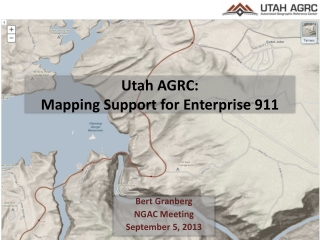
Utah AGRC:Mapping Support for Enterprise 911 Bert Granberg NGAC Meeting September 5, 2013
Mapping Resources for 911 • Find and validate incident locations • Assign response jurisdiction • Provide context • Post-incident analysis
Important Map Layers • Road Centerlines w/ Address Ranges • Site/Structure Address Points • Highway Mile Markers & Exits • Jurisdictional Boundaries: • law, fire, EMS, state and federal agencies • Common Place names • schools, parks, businesses, landmarks, trailheads, etc. • Base Maps and Aerial Photography • Cell towers • Water features • Utilities/Infrastructure
Solve the Problem: “Ma'am, you’ll need to send someone out to the highway to guide the ambulance to your property”
AGRC’s Activity • Statewide road centerline maintenance and coordination with Counties • Local Address System Updates • Address Point Dataset • Technical Mapping Support to PSAPs • Highway Reference System • Milepost and Exits • Other GIS Framework Data enhancement • Detailed Annual Activity Report to 911 Committee
Enterprise Approach 911 is the primary focus, but benefits are extended across emergency response: • 911 Call Routing • 911 Call Taking • Dispatching • Responders • Operations/Analysis • Ideally, all use the same, quality map resources
Next Gen 911: GIS becomes a core/foundational part of 911 • GIS role starts at the routing of 911 calls to PSAPs • Map data must be highly available, connected, and interchangeable, just like the communications system
Conclusion 911 Mapping Resources: • State of Utah is well-positioned • Expectations of mapping will expand • Data quality and currency • Servers, processes, etc • Continued support will be required to sustain current efforts and meet coming NG911 needs