Simplifying Instructional Design with the ADDIE Model at Wilkes University
This overview the ADDIE Model of Instructional Design focuses on key principles to streamline the learning experience. It emphasizes simplicity, brevity, and clarity in educational materials. The model advocates for concise content, consistent templates, and context-driven learning activities. By avoiding complicated interactions and ensuring that learners understand their objectives, instructional designers can create more effective and engaging educational experiences. The ADDIE Model serves as a practical framework to enhance design, development, and evaluation processes in instructional design.


Simplifying Instructional Design with the ADDIE Model at Wilkes University
E N D
Presentation Transcript
ADDIE MODEL Wilkes University Intersession 2010 Cathy Dowd
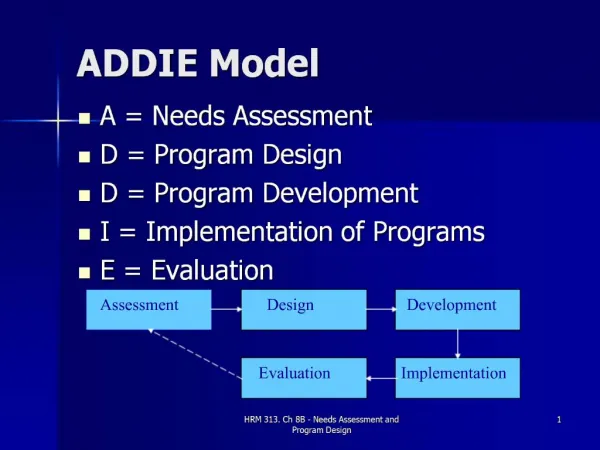
ADDIE Model of Instructional Design • A-nalyze • D-esign • D-evelop • I-ntegrate • E-valuate
Keep It Simple • Don’t make the learners jump through hoops of frustrating interactions • Bewildering exploratory activities • Tricky questions • Make the learning to-the-point • get to it quickly
Keep It Short • Learners have more than one subject to learn • Don’t stretch it out • Be concise
Keep It Consistent • Use a template that is easy to understand • Play a game without playing games
Keep It In Context • Let the learners know what they are doing and why • Examples: • games, case studies, Webquests, or “try it” activities. • If you are telling them a fictitious story, let them know that upfront.
Keep It Literal • “Clever” or “cute” animations or images irritate learners • Skip the metaphors, puns, flourishes of style • They are difficult to translate into learning
No Need for Perfectionism • Don’t treat the e-learning as a panacea • Revisions can be bigger and better as you see fit • Expect errors and minor setbacks • Get your project done so you can start a learning cycle ADDIE Model Website