Download
1 / 5
50 likes | 167 Views
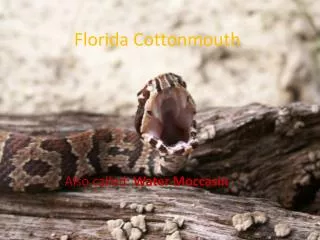
The Florida Cottonmouth, also known as the Water Moccasin, is a venomous snake found in wetlands and rivers. Adults range from 20 to 48 inches in length and are known for their distinctive spade-shaped heads. They showcase a unique threat display by opening their mouths to reveal the white lining inside. Despite their potential danger due to size and venom, bites are rarely fatal if medical care is received promptly, with treatment options including antivenins and antibiotics. These snakes primarily prey on small mammals, birds, and cold-blooded animals.

E N D
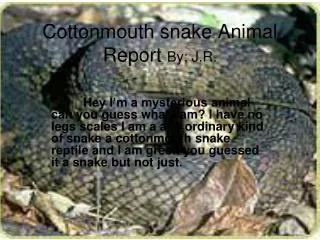
Florida Cottonmouth Also called: Water Moccasin
Facts: • Adults are from 20 - 48in. • They are dangerous because they are larger causing them to have more venom. • They got their name because of the way they open their mouths to show they white lining of their mouth. • They are mainly found in rivers, wetlands, etc. For example from Florida to Alabama. • Small mammals and birds as well as cold-blooded prey of various types is what they eat.
Facts continued: • They are found commonly in the wild. • Their heads are spade shaped, and larger than their necks. • When they bite, a lot of times they don’t release any venom. • Cottonmouth bites are not fatal if medical care is immediate. • The treatment includes antivenins, antibiotics and some intravenous fluids.
The End By: Veronica Fraga
Work cited • http://www.buzzle.com/articles/cottonmouth-snake-facts.html • http://venomoussnakesfl.com/cottonmouth.htm • http://timberrattlesnake89.tripod.com/cottonphotos.html • http://www.snakesandfrogs.com/scra/snakes/cotton.htm • http://www.centralfloridazoo.org/floridacottonmouth • http://www.venomousreptiles.org/data/articles/67/ttapc.jpg • http://pelotes.jea.com/Colcott.gif