Understanding the Compound Light Microscope: Skills and Usage Guidelines
This presentation provides an overview of the compound light microscope, emphasizing its structure and functionality. It details safe handling techniques for the microscope, such as proper carrying methods and slide placement. The guide outlines essential operations including diaphragm control, and switching between objective lenses for magnification (4X, 10X, 40X). It highlights important focusing practices and warnings to prevent slide damage while using high power. Mastery of these skills will enable effective observation of specimens.


Understanding the Compound Light Microscope: Skills and Usage Guidelines
E N D
Presentation Transcript
PPT - 1 Microscope Skills RESTRICTED
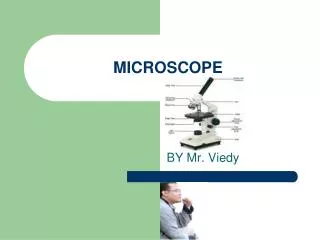
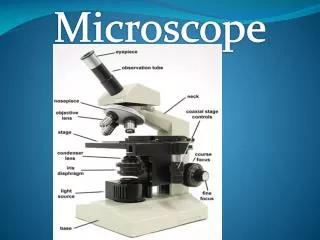
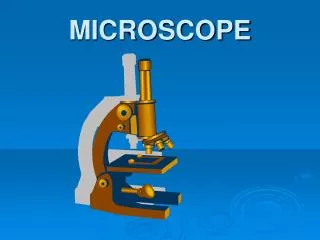
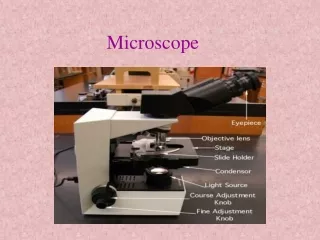
The Compound Light Microscope The microscope above is called a compound light microscope. The microscope is called this due to the use of light to transmit the image to your eye through the use of lenses.It is called a compound microscope because it has more than one lens. RESTRICTED
Parts of a Compound Microscope RESTRICTED
Always carry the microscope with one hand on the arm and the other on the base. RESTRICTED
Put the slide on the stage and use the the clips to hold the slide in place. RESTRICTED
Open the diaphragm(shutter) and switch on the lamp power when you are using the microscope. RESTRICTED
A microscope has several lens and each magnifies the specimen like a magnifying glass. Themagnification of the eyepiece is 10 times. RESTRICTED
3 objective lens are 4X, 10X and 40X RESTRICTED
Always start with the low power objective (4X) • Always focus using the coarse knob, then the fine focus knob. • Centralise what you want further magnified • Switch to the 10X objective lens and if needed, to the 40X objective lens • At high Power, use only the fine focus knob! RESTRICTED
When using the high power objective lens:1) Do not remove the slide as it is very close to the objective lens. 2) Do not use the coarse focus knob as it will crack the slide. 3) To remove slide, switch to low-power or mid- power objective lens. RESTRICTED