Download
1 / 9
100 likes | 274 Views
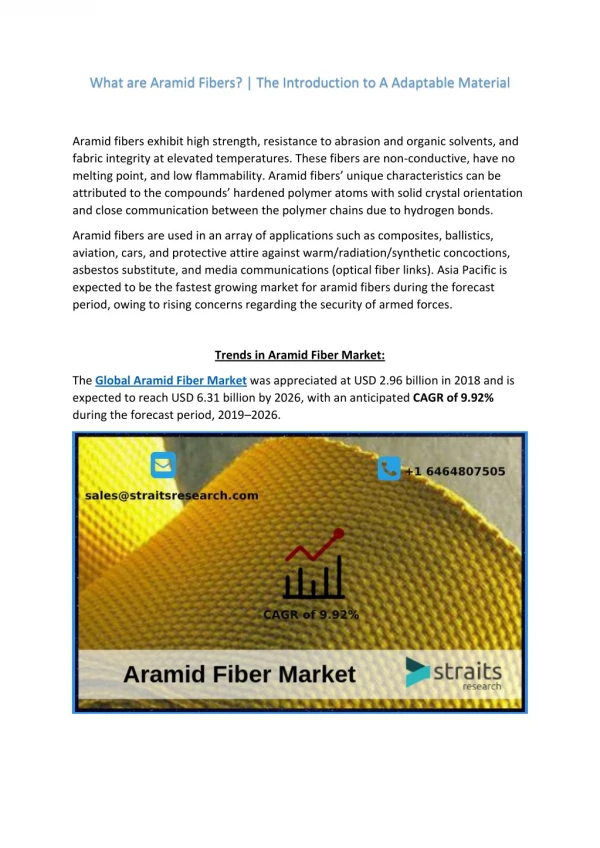
Aramid fibers are high-performance materials characterized by their molecular structure of linked benzene rings and amide bonds. There are two main types: Para-type (like Technora and Twaron), known for superior tensile strength, heat resistance, and fatigue resistance, and Meta-type, favored for high heat resistance and non-flammability. Aramid fibers are used in a variety of applications including ropes, cables, rubber materials, and even speaker cones, enhancing durability and sound quality. Explore the unique properties and applications of these remarkable fibers.

E N D
Aramid Fibers By: Me
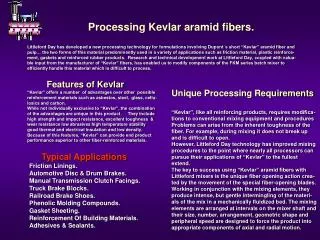
What are Aramid Fibers? • Molecular structure made of linked Benzene rings and amide bonds • Para-type • Meta-type TECHNORA : co-poly-(paraphenylene/3,4'-oxydiphenylene terephthalamide) TWARON : poly-(paraphenylene terephthalamide) (PPTA) TEIJINCONEX : poly-(metaphenylene isophthalamide) (MPIA)
Para-Type • Known for superior tensile strength and elasticity • Tensile strength 2.5 times of (strength type) nylon fibers. • High impact resistance • Fatigue resistance • High tensile modulus • Chemical resistance • Heat resistance
Products • Made from Para-type Chopped fiber(Short cut fiber) Filament yarn Staple fiber Spunnized yarn
Applications • Rope, Cable, and Cord • Rubber materials • Construction • Reinforcement of plastics • Safety Materials .
Meta-Type (My Favorite) • Very Heat Resistance • Do not ignite • Won’t melt
Cool Products • Pioneer speakers • long stands of Aramid fibers into the mix, along with the polypropylene and carbon and Rigilite • makes the cone more dense, much stronger, and even more durable • More powerful bass. Rich, full-bodied sound character with excellent midrange depth. • The open, natural sound found in paper cones (but without the fragility of paper). • Durability. The cones stand up to high power levels and the tough conditions within a car, such as temperature extremes and humidity, that will thrash weaker speakers.
Resources • http://www.teijin-aramid.com/ENG/tech_frame.htm • http://www.lightweight.nl/aramid .htm • http://www.fcc.co.jp/JCFA/cs/seni/e_aramid.html • http://www.pioneerelectronics.com/pna/article/0,,2076_4063_48333,00.html