Download
1 / 43
430 likes | 541 Views
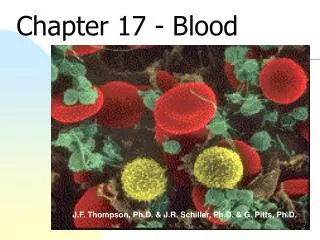
Explore the composition of blood, hematocrit levels, red and white blood cells, including their functions, life cycles, and normal values. Learn about platelets and the production of different types of blood cells.

E N D
Blood Volume • Roughly 5 liters per person • Blood is heavier than water (components are made primarily of water with other biochemicals added in!) • Varies with: • Body size • Changes in fluid and electrolytes/salt • Amount of adipose fat tissue • Gender (males have more than females!)
Hematocrit • Def: % of formed elements in blood • Mostly red blood cells (RBCs) – 55% • WBCs and platelets– less than 1% • Normal values • In males- mid to high 40’s • In females- low 40’s • When centrifuged/spun: • White blood cells (WBCs) and platelets form a thin very thin layer on top – called “buffy coat” – between plasma and RBCs • Remaining ~45% - plasma
Formation of Blood cells • Hematopoiesis • Def: process by which immature stem cells become specialized • Become either RBC, WBC or platelets • Location: Occurs in red bone marrow
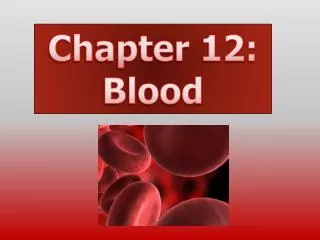
Red Blood Cells • Also called erythrocytes • Biconcave shape • Increases surface area/volume ratio • Mature cells lack nuclei • 1/3 filled with hemoglobin • Oxygen carrying polypeptide molecule
Hemoglobin • Composed of four chains (polypeptides) • Also has iron or “heme” group attached • Called oxyhemoglobinwhen oxygen is bound to it (bright red color) • Called deoxyhemoglobin when oxygen is released (darker color)
Red Blood Cell Counts • The higher the # of RBCs = higher oxygen carrying capacity • Change in # affects health – greatly! • Used, in part, to help diagnose and evaluate diseases • Typical range • Males: 4,600,000 – 6,200,000 cells per mm3 • Females: 4,200,000 – 5,400,000 cells per mm3
Red Blood Cell Life Cycle • Hematopoiesis (red blood cell formation) • Before Birth: yolk sac, liver, and spleen • After Birth: red marrow • Controlled very precisely by homeostatic mechanisms • Production influenced by: • Vitamin B12 • Folic acid • iron
Red Blood Cell Life Cycle (cont) • Circulate for 120 days • Old or damaged RBC’s are destroyed (removed from blood circulation daily) • Phagocytized by macrophages in liver or spleen • Hemoglobin is broken into heme and globin • Heme is broken into iron and biliverdin (greenish pigment) • Biliverdin is converted to bilirubin • Iron is stored in liver or brought to marrow • Biliverdin and bilirubin are secreted in bile
White Blood Cells WBC animation • Also called leukocytes • Production stimulated by interleukins and colony-stimulating factors • Two groups: • 1) Granulocytes - have granular cytoplasm • Neutrophils • Eosinophils • Basophils • 2) Agranulocytes- no cytoplasmic granules • Monocytes • Lymphocytes
Neutrophils • Granulocyte • Average 54-62% of leukocytes • Fine cytoplasmic granules that are light purple in neutral stain • Nucleus: 2-5 lobes • Lifespan: about 12 hours • Function: phagocytize bacteria and other particles
Eosinophils • Granulocyte • Average 1-3% of leukocytes • Coarse cytoplasmic granules that are deep red in acid stain • Nucleus: 2 lobes • Lifespan: about 12 hours • Function: destroy certain parasites and control inflammation or allergic reactions
Basophils • Granulocyte • Average ‹1% of leukocytes • Relatively few, irregularly shaped cytoplasmic granules that are deep blue in basic stain • Nucleus: 2 lobes • Lifespan: about 12 hours • Function: release heparin and histamine
Monocytes • Agranulocyte • Average 3-9% of leukocytes • Nucleus: Varied shape • Lifespan: several weeks or months • Function: phagocytize materials
Lymphocytes • Agranulocyte • Average 25-33% of leukocytes • Nucleus: Large and round • Lifespan: may live for years • Function: function in immune response
White Blood Cell Count WBC animation • Normal range: 5,000-10,000 mm3 • Differential White Blood Cell Count • Distinguish how many of each type • Can be important for diagnosing some disorders/problems • Excessive: • If your WBC count exceeds 10,000, this is leukocytosis(infection) • Ex: Appendicitis • Deficiency: • If you WBC count is below 5,000, this is leukopenia(low count) • Ex:typhoid fever, influenza, measles, mumps, chickenpox, AIDS, polio
Thumbs Up, Thumbs Down • White blood cells are also called leukocytes • UP!!! • When discussing hematocrit, WBCs make up the majority of your blood. • DOWN!!! • The more WBCs you have, the better you’re probably feeling. • DOWN! • Lymphocytes function to assist your immune system • UP!!!
WBC REVIEW! • Neutrophils are granulocytes. • YES!!! • Basophilsphagocytize materials. • NO!!! • Monocytes make up the majority of your WBCs. • NO!!! • Have an excessive WBC count can mean an infection like appendicitis. • YES!!!
Blood Platelets • Also celled thrombocytes • Made from megokaryocyte • Large cells in red bone marrow • Production stimulated by thrombopoietin (hormone) • Lack nucleus • ½ the size of RBC • Lifespan: about 10 days • Function: form blood clots, help close breaks in damaged blood vessels • Normal range: 130,000-360,000
Blood Plasma • 91-2% water • Remainder is mixture of biochemicals • Proteins, nutrients, hormones, electrolytes • Function: • Transporting nutrients, gases and vitamins • Regulate fluid and electrolyte balance • Maintain proper pH
Plasma Proteins • Main component of dissolved substances • Remain in plasma (not metabolized/broken down) • Types: • 1) Albumin (60%) • Help establish colloid osmotic pressure • Transports lipids and steroid hormones • 2) Globulins (36%) • Transport of ions, lipids and fat-soluble vitamins and some antibodies • 3) Fibrinogen (4%) • Function in blood coagulation and clotting
Blood Gases and Nutrients • Most important blood gases: • Oxygen • Carbon dioxide • Plasma nutrients: • Materials absorbed from digestive tract • Ex: Amino acids, simple sugars, nucleotides, lipids • Fats (triglycerides) • Phospholipids • Cholesterol • Lipoproteins • When Fats, phospholipids, cholesterol combine with proteins • Large size
Other Blood Substances • Nonprotein Nitrogenous Substances • Amino acids • Urea and uric acid • Electrolytes • Various ions (K+, Ca+, Cl-)
Hemostasis • Def: the stoppage of bleeding • Important when blood vessels are damaged (following injury) • Vasospasm • Contraction of blood vessel walls in response to small break • Platelet plug • Platelets adhere to damage and to each other to create a plug; may release serotonin to cause vasoconstriction • If previous two are unsuccessful, blood clot may form (through coagulation)
Blood Coagulation • Def: formation of blood clot • Damaged tissue releases tissuethromboplastin(hormone) • After series of rxns, prothrombin activator is created • Prothrombin activator (with Calcium) converts prothrombin to thrombin • Thrombin cuts fibrinogen into fibrin fibers that form a meshwork overthe damage
Blood Disorders • Hemophilia • Uncontrolled bleeding (hemorrhaging) following injury, frequent nosebleeds, blood in urine • Inherited clotting disorder • Carried on X chromosome (recessive) • Von Willebrand Disease • Tendency to bleed and bruise easily • Inherited clotting disorder • Far less severe than hemophilia
Blood Disorders • Leukemia • Symptoms: • Fatigue, frequent colds/fevers, chills, sweats, bruising, bone pain • Diagnosing: • Few RBCs and platelets, TOO many WBCs (notice the prefix “leuk” from leukocytes) • Cause: • Red bone marrow producing too many granulocytes cancer cells are not controlled – spread • Treatment: • Stem cell transplants, chemotherapy drugs
Normal smear Leukemia smear
Blood Types • Types: A, B, AB, O • Typing is based on antigens found on RBC’s • Two most important groups: • 1) ABO group • 2) Rh group • + and – of each type • Ex: A-, B-, AB-, O-; A+, B+, AB+, O+
ABO System • Blood type is codominant (A and B are BOTH equally dominant) • Possible blood type genotypes (genetic code) • A (IAIA or IAi) • B (IBIB or IBi) • AB (IAIB) • O (ii)
ABO Incompatibility • Mixing blood types can cause agglutination
Rh Blood Group • Possible Rh Blood Types: • + (++ or +-) • - (--)
Erythroblastosis fetalis • Condition cause by Rh incompatibility between mother and fetus
Blood Typing Review Questions • I have O- blood. What type can I receive? • O- ONLY • I have AB+ blood. What type can I receive? • ANY!!! • I have B- blood. Who can take my blood? • B+ or B-; AB+ or AB-