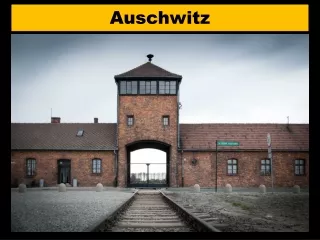

Auschwitz
E N D
Presentation Transcript
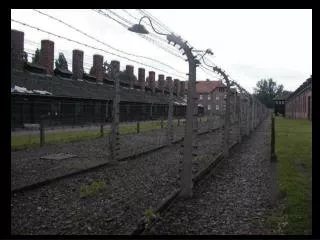
A few things before you start. . . • These pictures are disturbing. They should be. Auschwitz is the sight of the largest mass murder in history. • The pictures cannot communicate the size and feeling of Auschwitz. For that you have to go and see it for yourself. • I took almost all of these pictures. The ones I did not take have a blue outline. (There are parts of the site you cannot use a camera.)
Auschwitz Krakow, Poland
Estimated Victims Treblinka: 800 000 – 925 000 Bełżec: 350 000 – 600 000 Sobibór: 167 000 – 250 000 Chełmno: 152 000 – 320 000 Majdanek: cirka 80 000 Auschwitz-Birkenau: cirka 1 100 000
• What we call Auschwitz was 3 camps-Auschwitz I, II, and III • Auschwitz I was a former army base. When the Nazis took it over, it became a work camp. Today it houses the museum and memorial. • Auschwitz II (also known as Birkenau)was the death camp. Most people who arrived there went directly to the gas chamber. The hundreds of barracks housed workers for Auschwitz III and other slave labor. Today it looks just like it did when the Soviet Army arrived in 1945. • Auschwitz III was a series of factories for the Nazi war machine. It is not open for visitors.
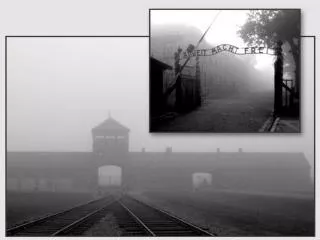
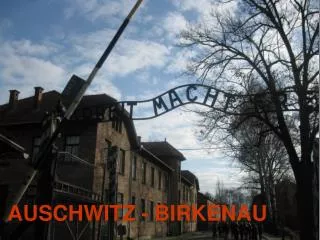
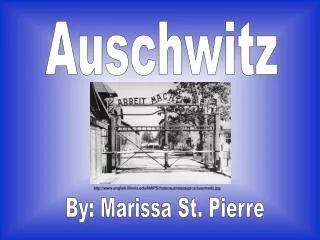
Work Will Make You Free Work Will Make You Free
Small Gas Chamber, Auschwitz I Small Gas Chamber, Auschwitz I
Museum and Memorial at Museum and Memorial at Auschwitz I Auschwitz I • Urn containing ashes of some victims • According to survivors, ashes were thrown in the river, scattered on the grounds, and tossed in the woods • When you walk around Auschwitz, you walk on the ashes of victims
Poison Gas Canisters Poison Gas Canisters
Personal Belongings of Victims Personal Belongings of Victims
• The Holocaust was also the largest theft in all of human history. • Victim’s belongings were all taken from them. • Some of the things they brought with them are in the museum. Most of their belongings were used for the Nazi war machine or given to Germans who had been bombed.
Personal Belongings of Victims Personal Belongings of Victims • The Nazi’s first victims were the disabled • The first use of poison gas was in vans where the Nazis poisoned the physically and mentally disabled
Personal Belongings of Victims Personal Belongings of Victims
Victim’s Hair Victim’s Hair
Barracks in Auschwitz I Barracks in Auschwitz I
Execution Wall Execution Wall
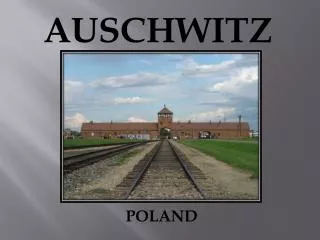
Auschwitz II Auschwitz II
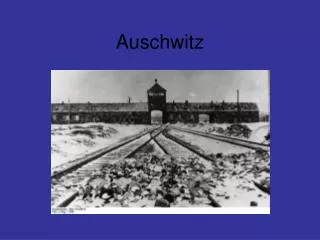
• Train platform inside the camp • This was the last place many place saw their loved ones
Gas Chamber at Auschwitz II Gas Chamber at Auschwitz II • Three massive gas chambers and crematoria at Auschwitz II were blown up by the Nazis as the Soviet Army approached • Their remains have not been touched since 1945
• The camp is massive, much bigger than pictures show • The plan was for it to be bigger. The Red Army arrived before the Nazis could finish building all of the planned for barracks
Barracks at Auschwitz II Barracks at Auschwitz II
Facts that stuck with me. . . Facts that stuck with me. . . • Auschwitz is Hungary’s largest cemetery. It is in Poland. • The first tours of Auschwitz were given by survivors. Despite what had to be and emotionally draining and extremely difficult story to tell, they wanted the world to know. • The place is huge. The pictures do not you a good idea of the size. • Auschwitz has almost 2 million visitors a year.