Copperbelly Water Snakes and Its Habitat
210 likes | 1.17k Views
Copperbelly Water Snakes and Its Habitat. By: Matt Tekulve. Simi-Aquatic and Aquatic Snakes. Queen Snake Garter Snake Northern Brown Water Snake Cottonmouth Diamondback Water Snake Midland Water Snake Red, Yellow and Copperbelly Water Snake.


Copperbelly Water Snakes and Its Habitat
E N D
Presentation Transcript
Copperbelly Water SnakesandIts Habitat By: Matt Tekulve
Simi-Aquaticand Aquatic Snakes • Queen Snake • Garter Snake • Northern Brown Water Snake • Cottonmouth • Diamondback Water Snake • Midland Water Snake • Red, Yellow and Copperbelly Water Snake
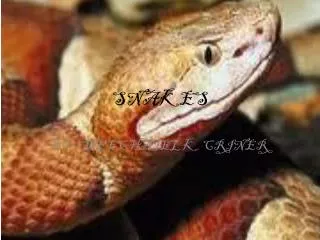
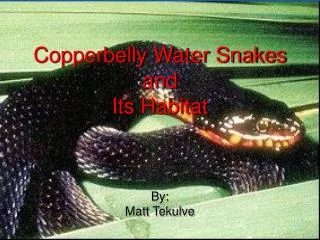
Adult IdentificationCopperbelly Water Snake Nerodia erythrogaster neglecta • Adult- Solid dark to black dorsal surface with a bright red to orange belly that extends to the chin • Length is between 3 to 5 feet Record 62 in .
Juvenile Identification • Juvenile’s are strongly blotched and banded similar to other juvenile water snakes
Similar Species • Many times the Copperbelly may be misidentified for: • Northern Brown Water Snake • Cottonmouth • Midland Water Snake • Red and Yellowbelly water snake
Types of Habitats Wetlands • Wetlands • Uplands • Wintering
Types of Wetlands Floodplain Forest Shrub Swamp Undulating Shore line Shallow Open Water Ephemeral Wetland
Upland Habitat • Copperbelly Water Snakes can travel Hundreds of yards from wetlands mostly in hot months • Travel, Shedding, birthing, digestion, refuge
Wintering Habitat • Copperbelly Water Snakes Hibernate in Crayfish Burrows Late October to April
Movement • Copperbelly Water Snakes are Simi-Aquatic • Average seasonal Home Range is 20 ha (50 acres) • Use 3-5 wetlands regularly
Corridors • Can not be intimidating • Riparian Buffer Strips • Short Upland Forest • Seasonal Wetlands
Distribution • North Range- Ohio (Williams Co.) and Michigan (Hillsdale Co.) • South Range- SE Illinois, S. Indiana, W Tenn., NW Kentucky
Endangered Species List • Listed as an Endangered Species in Indiana, Michigan, and Ohio • Are Protected under Federal Law • No killing of snakes Intentionally or unintentionally
Cpperbelly Water Snake Conservation Agreement • Formed in 1997 In Illinois and Kentucky • Remove Threats to its existence • Cooperation of Private and Public Parties
Cpperbelly Water Snake Conservation Agreement • To do this the state of Kentucky had to: • Describe the status of the Copperbelly • Why Protection was needed • Outline the Conservation Agreement • Address the Accomplishments and Weaknesses of the Conservation Agreement
Natural Predators • Large Fish • Snapping Turtles • Herons • Hawks • Foxes • Raccoons • Opossums • Minks • Skunks • Domestic Dogs, Cats and Hogs
Human as Predator: Management Problems • Loss of Habitat and Fragmentation • Wetland Drainage • Wetland Filling • Wetland Deepening • Agriculture Purposes • Surface mining • Water Quality • Pet Trade
Management and Conservation Practices • Shallow Ephemeral and Permanent Wetlands • Wetlands in close proximity • Natural Corridors • Stock native amphibian eggs No Fish! • Upland, Forested areas to be minimum Timber Harvest • Restrict Vehicles and Heavy Equipment • Hibernation habitat • Edge from Cropland (Buffer Strips)
Edge • 10-20 feet • Bush hogging, mowing and other maintenance should be done in the winter • Minimize use of crop and lawn Fertilizers, oil, paints, and other toxic chemicals
Ways to Help • Learn about endangered species and their Habitat • Protect the habitat • Educate others SaveMe