Machine Guarding
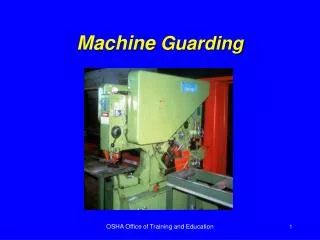
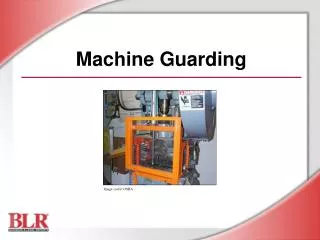
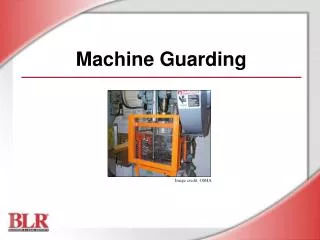
Machine Guarding. Image credit: OSHA. Session Objectives. You will be able to: Understand the hazardous actions of different types of machinery Identify the hazards of working with machinery Identify machine safeguards and know how they work Properly operate machines with guards.

Machine Guarding
E N D
Presentation Transcript
Machine Guarding Image credit: OSHA
Session Objectives • You will be able to: • Understand the hazardous actions of different types of machinery • Identify the hazards of working with machinery • Identify machine safeguards and know how they work • Properly operate machines with guards 0507
Why Machines Must Be Properly Guarded • Point of operation hazards • Power transmission apparatus hazards • 800 deaths each year • High injury rates • Amputations, fractures, lacerations, and crushing • Electric shock and burns 0507
Unsafe Machines Cause Injuries • Poorly designed machines • Poorly maintained machines • Machines being used for unintended purposes • Machine not properly installed • Inadequate safeguarding • Objects discharged from the machine 0507
Unsafe Actions Cause Injuries • Reach around, under, over or through guards into hazardous areas • Remove or bypass guards • Reach into equipment to remove stuck or jammed material • Not use electrical safety procedures • Not wear appropriate protective equipment • Not know how to properly service or repair machines 0507
Regulatory Requirements • 29 CFR 1910, Subpart O • Applies to specific types of equipment • Training 0507
Where Machine Hazards Occur • Point of operation • Drill bit cutting wood • In-running nip points • Power transmission apparatus • Operating controls and moving parts 0507
Types of Rotating Machine Parts • Collars, couplings, and cams • Clutches, gears, and pulleys • Flywheels • Shafts, including shaft ends Image credit: OSHA 0507
Nip Points • Hazard—Hands, arms, or whole body get caught in nip • Causes lacerations, crushing, amputation, and death • Created by: • Two parts rotating in opposite directions • Parts rotating tangentially • Parts rotating close to a fixed part 0507
Point of Operation Functions • Cutting • Punching • Shearing • Bending • Compressing 0507
Cutting Machines and Actions • Hazard—Cutting action, flying chips or scrap material cut fingers or strike the head or body • Machines • Band and circular saws • Boring or drilling • Lathes and milling • Actions • Rotating, reciprocating, or transverse motion 0507
Punching Machines and Actions • Hazard—Fingers can be crushed where material is inserted, held, or withdrawn • Machines • Power presses • Ironworking equipment • Action of ram mechanism • Blanking, drawing, or stamping Image credit: OSHA 0507
Shearing Machines and Actions • Hazard—Crush or tear body parts where material is inserted, held, and withdrawn • Machines: • Hydraulic shears • Mechanical shears • Pneumatic shears • Actions • Powered slide or knife to trim or shear metal or other materials Image credit: OSHA 0507
Bending Machines and Actions • Hazard—Crushing body parts where material is inserted, held, or withdrawn • Machines • Power presses and press brakes • Tubing benders • Actions • Draw and stamp Image credit: OSHA 0507
Compressing Machines and Actions • Hazard—Compression crushes body parts • Machines • Compactor • Molding • Concrete • Actions • Squeezing, extruding, and pressing 0507
Power Transmission Apparatus • Hazard—Grab, nip, cut, or strike body parts • Machines and parts • Power transmission belts and pulleys, gears, sprockets and chains, shafts, collars, couplings, flywheels, clutches, and other power transmission apparatus • Action • Grabbing, nipping, cutting, flying and falling objects, reciprocating motions, transverse motions, or a combination of these 0507
Types of Machines and Hazards—Any Questions? • Are there any questions about the types of machines or equipment used at our facility? • Any questions about the hazards associated with the operation of the machinery? Power transmission apparatus? • Any questions about machine and equipment hazards in general? 0507
Purpose of Machine Safeguarding • Prevent access to point of operation and power transmission apparatus • Prevent objects from being ejected toward people 0507
Safeguarding Best Practices • Never remove or defeat safeguards • Don’t create new hazards • Ensure no interference with the production process • Lubricate parts without removing the safeguard, or turn off the machine 0507
Safeguarding Best Practices (cont.) • Remove guards only when machine is locked and tagged out • Report problems immediately • Operate equipment only when guards are in place and properly adjusted • Don’t use unauthorized or damaged guards • Never leave machines unattended with parts still moving • No loose clothing, long hair, or jewelry 0507
Classifications of Safeguards • Safeguard or barrier • Device • Location and distance • Automatic stock feed and ejection method • Miscellaneous aids 0507
Fixed Safeguards • Permanent part of the machine or apparatus • Best guard protection • Power transmission apparatuses are best protected by fixed guards or barriers that enclose the danger area Image credit: OSHA 0507
Interlocked Safeguards • Automatically shut off and quickly stop the machine or apparatus Image credit: OSHA 0507
Adjustable or Self-Adjusting Safeguards • Adjustable to accommodate varying sizes of material placed at the point of operation • Self-adjusting types move according to the size of the stock 0507
Safeguarding Devices • Presence sensing automatically shut down equipment • Photoelectrical, radio frequency, and electromechanical • Pullbacks or Restraints • Gates around robots and large areas • Interlocked • Other Image credit: OSHA 0507
Safeguarding Devices (cont.) • Safety trip control • Pressure-sensitive body bar • Safety tripod • Safety tripwire cable • Two-hand safety control or two-hand safety trip Image credit: OSHA 0507
Two-Hand Devices • Two-hand controls require constant two-hand pressure during the entire machine cycle • Two-hand trips activate the machine, then allow hands to be free while machine completes its cycle 0507
Location and Distance • Separates operators from the equipment • Makes it virtually impossible to contact moving parts • Limited by the available workspace Image credit: OSHA 0507
Feeding and Ejection Methods • Automatic feed • Semiautomatic feed • Automatic and semiautomatic ejection • Robot 0507
Miscellaneous Aids • Awareness barriers • Protective shields • Hand-feeding tools and holding fixtures Image credit: OSHA 0507
Rule of Thumb • Guard any machine part, function, or process that may cause injury • Follow manufacturer’s specifications 0507
Machine Safeguarding—Any Questions? • Any questions about safeguarding best practices? • Questions about any particular type of safeguard? 0507
Key Points to Remember • All point of operation and power transmission apparatus hazards must be safeguarded • Do not operate machines without proper guards in place • Remove guards or protective devices only when machine is not operating • Immediately report problems with safeguards 0507