Download
1 / 5
50 likes | 214 Views
This article explores the critical compliance distinctions between "supplement" and "supplant" funding within categorical programs designed for special student populations. Categorical funds are intended to enhance existing revenue streams, but misuse can lead to compliance violations. We analyze three key considerations: using categorical funds for services mandated by law, replacing previous non-categorical funding, and potential issues with Title I services. Additionally, we discuss the importance of clearly defining core programs and communicating entitlements to all district students and the community.

E N D
Supplement vs. Supplant Compliance Issues for Categorical Programs
Categorical Programs • State and federal programs designed to support special populations of students. The funds are to enhance existing general revenues provided to all students. Each categorical program has a unique set of guidelines for the use of the funds.
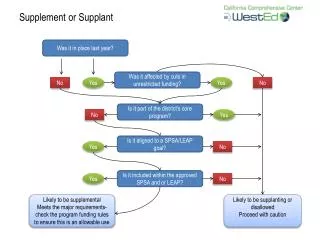
Supplement vs. Supplant • There are three compliance considerations to determine if an activity is supplanting other resources: • 1. If the LEA uses categorical funds to provide services that the LEA was required to make available under other federal, state or local laws. • 2. If the LEA uses categorical funds to provide services that the LEA provided with non-categorical resources the previous year.
Supplement vs. Supplant (continued) • 3. If the SEA used Title I, Part A funds to provide services for participating children that the SEA or LEA provides with nonfederal funds for nonparticipating children.
What’s the Base or Core Program? • What services, resources, or staffing would be provided if the district received only general fund resources? • Have you written a description of the basic services all children attending your district are entitled to receive? • Have you communicated this information to your community?