Evolving Emergency Management: Insights from the Changing Risk Environment Workshop (2005)
The 2005 workshop on the changing risk environment in public health and emergency management highlighted critical provincial perspectives. It emphasized the importance of an integrated approach to emergency management across all pillars: prevention, mitigation, preparedness, response, and recovery, while adapting to diverse threats including climate change and public expectations. Key insights included the need for comprehensive risk-based programs, enhanced collaboration among stakeholders, and the establishment of standards and protocols to improve national security and public health responses.

Evolving Emergency Management: Insights from the Changing Risk Environment Workshop (2005)
E N D
Presentation Transcript
The Changing Risk Environment Public Health & Mapping Workshop 2005-11-21
Purpose Provide a *brief* provincial perspective on: • Emergency Management 1000 • Changing Risk Environment • Recent Lessons Learned • What’s Needed
Emergency Management Arrangements … and policy plans process systems training program resources education Relationships knowing who to call knowing who you’re calling
Emergency Management Not just planning and response; pillars are: • Prevention; • Mitigation; • Preparedness; • Response; and • Recovery . . . for all hazards, risks and vulnerabilities.
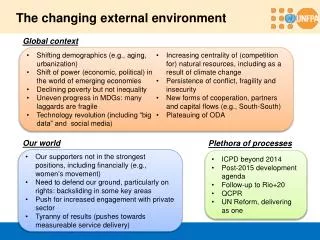
What has Changed? • Environment • Diversity of threats, risks and hazards • Impacts of climate change • Science and technology • Public expectations • Public policy • Executive
What has Changed? • Structures • Departments of Public Safety, 2000 • National Security Policy, 2003 • Public Safety & Emergency Preparedness Canada, 2003 • Emergency Management & National Security Branch, 2004 • Governance Structures (Federal and FPT Fora), 2005
What has Changed? • Consequently: • Emergency Management and public health being redefined as key components of national security. • Increased interaction among emergency management, health and security actors. • Increased requirements for information and application sharing and integration. • Comprehensive risk based programs
Point Lepreau Generating Station Industrial Accidents
Hurricane Juan 2003 Natural Disasters
Infectious Disease Infectious Disease
September 11, 2001 Deliberate Acts
Business Requirements … • Centralized infrastructure, applications and databases • Consistent process and tools, across organizations • No special user or client side requirements • Remote access / distributed access • Real time communications • Security
Security Requirements … • Secure Server Environment (Government Standard) • Managed Access (Secure Internet Portal) • Encrypted Transactions (SSL) • Site / User Administration
What is Needed? The changing environment for EM requires: • all emergency agencies to work closely together, • risk based emergency programs, • a community of practice, • public participation, • collaboration tools, • standardization.
What is Needed? • Emergency Management Culture (Community of Practice) • Emergency Management Profession (Discipline & Practice) • Doctrine • Certification • Knowledge Base • Program Standards • Program Evaluation
Questions? Ernie MacGillivray ernest.macgillivray@gnb.ca 506-453-2133 800-561-4034