Understanding Emotional Responses in Interaction with Biometric Sensor Systems
This document explores the integration of emotional response recognition into biometric sensor systems. Specifically, it examines the role of machine learning in classifying emotions such as anger, surprise, disgust, happiness, sadness, fear, and their potential application in interactive environments. By leveraging audio, visual, and social interaction data, the objective is to enhance user experience and satisfaction. The framework employs advanced optimization techniques like Newton's Method to optimize system performance, with a focus on secure, user-specific biometric data transformations.

Understanding Emotional Responses in Interaction with Biometric Sensor Systems
E N D
Presentation Transcript
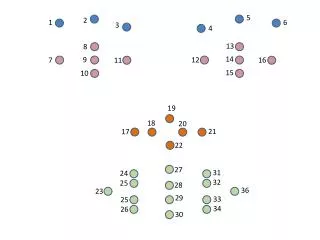
5 2 1 6 3 4 13 8 14 9 12 7 16 11 15 10 19 18 20 21 17 22 27 31 24 32 25 28 36 23 29 33 25 34 26 30
Rain, Sprinkler, Wet Grass, T F 0.99 0.01 T T 0.4 0.54 0.46 F 0.6 F
Prior Knowledge: Decision: Happy Sad Surprise Disgust Fear Anger Exemplar: Observation:
Total Training Space Distance Ordering k 1 k 1 k 1 k 1 k 1 k 1 Expression Label 1 k Exemplar Layer Node Selection Goal: Findsuch that
Angry Surprise Disgust Happy Sad Fear Disciplined Convex Optimization Newton Method
Motion Audio Visual Social Interaction Assistant Actuator Suite Sensor Suite User Input Audio Haptic
Secure / Erasable Insecure Machine Learning towards Identification/ Verification Proprietary Transformation Transformed Biometric Data Biometric Data User Specific Key Encoder Transformation Parameters
Frontalis Levator Palpebrae Superioris Orbicularis Oculi Zygomaticus Minor Zygomaticus Major Orbicularis Oris Depressor Labii Inferioris Mentalis