Asexual Reproduction
60 likes | 179 Views
Asexual reproduction is a biological process where genetically identical offspring are produced from a single parent. This method of reproduction results in no genetic variation, allowing traits to remain unchanged. Key mechanisms of asexual reproduction include budding, binary fission, vegetative reproduction, and mitosis. Budding occurs in organisms like yeast and hydra, while binary fission is commonly seen in bacteria. Vegetative reproduction involves plants sending out runners or roots to create clones, and mitosis is the process through which eukaryotic cells divide for growth and repair.


Asexual Reproduction
E N D
Presentation Transcript
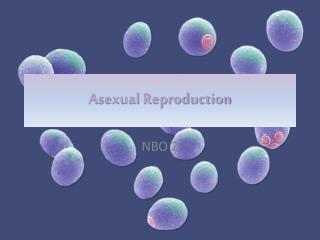
Asexual Reproduction NBO 2
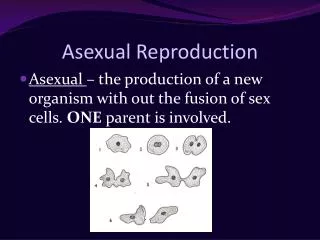
Asexual • When a genetically identical offspring is created from ONE mother cell. • No genetic variation • Everything stays the same
Budding • DEF: When an identical offspring forms on the body of the adult • Org: Yeast and hydra
Binary Fission • DEF: When a prokaryote splits itself in HALF forming two identical daughter cells • Org: Bacteria...duh (=
Vegetative Reproduction • DEF: When an adult plant sends out roots and/or runners (rhizomes) which produce clones. • Org: Plants (strawberries, Aspen trees, spider plant)
Mitosis • DEF: When an eukaryote produces body cells for the purpose of growth and repair. One cell splits into two identical daughter cells. • Org: Eukaryotes