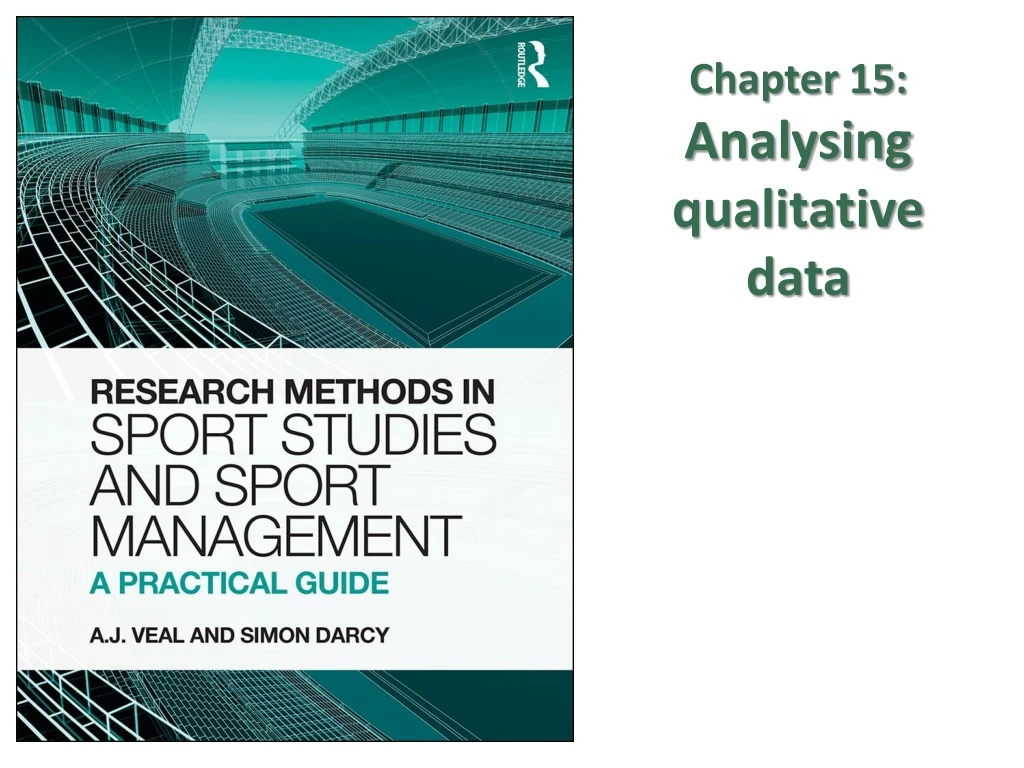
Analyzing Qualitative Data Methods in Sport Studies
260 likes | 283 Views
Learn about qualitative data collection, analysis, and storage with manual methods and NVivo software. Explore analysis models, case studies, and conceptual frameworks in sport studies research.


Analyzing Qualitative Data Methods in Sport Studies
E N D
Presentation Transcript
Chapter 15: Analysing qualitative data
CONTENTS • Introduction: Data collection, analysis, storage • Case study example • Manual methods • Qualitative analysis using computer software • NVivo
Qualitative data collection and analysis (Fig. 15.1) C. Analysis Traditional deductive/ quantitative model B. Observation/ description A. START: Explanation/ hypotheses/ theory/ research questions Data collection The literature and informal observation A. J. Veal & S. Darcy (2014) Research Methods for Sport Studies and Sport Management: A practical guide. London: Routledge
Qualitative data collection/analysis contd On-going Data collection D. Refinement of hypotheses/ research questions Inductive/ qualitative model E. Continuing observation/ description C. Analysis F. Final analysis B. Observation/ description A. START: Explanation/ hypotheses/ theory/research questions Data collection The literature and informal observation A. J. Veal & S. Darcy (2014) Research Methods for Sport Studies and Sport Management: A practical guide. London: Routledge
Data storage and confidentiality • As discussed in Ch. 4: Research ethics • Problems when respondents name names A. J. Veal & S. Darcy (2014) Research Methods for Sport Studies and Sport Management: A practical guide. London: Routledge
Case study example: CS 15.1 • Activity choice qualitative study: used to illustrate analysis methods • A conceptual framework diagram: Fig. 15.2 • Three interview transcripts: Mark, Donna and Lee – copies available on-line A. J. Veal & S. Darcy (2014) Research Methods for Sport Studies and Sport Management: A practical guide. London: Routledge
Outline conceptual framework (Fig. 15.2): Leisure/sport activity choice affected by a variety of factors Level 1 Level 2 Influences Main activity type Constraints/ opportunities Sporting Social Personal factors Cultural Events A. J. Veal & S. Darcy (2014) Research Methods for Sport Studies and Sport Management: A practical guide. London: Routledge
Case study transcripts: example (Fig. 15.3) A. J. Veal & S. Darcy (2014) Research Methods for Sport Studies and Sport Management: A practical guide. London: Routledge
CS transcript: example: with manual coding (Fig. 15.3) A. J. Veal & S. Darcy (2014) Research Methods for Sport Studies and Sport Management: A practical guide. London: Routledge
Manual analysis • Importance of reading/re-readingtranscripts. • Identification of emergent themes(similar to variables in quantitative research). • Themes may • arise from conceptual framework/ research questions - therefore searched for deductively, or • emerge unprompted, inductively. • Themes ‘flagged’ by researcher – as in column 1 of Fig. 15.3 • Can result in a more developed conceptual frame-work – see Fig. 15.4 A. J. Veal & S. Darcy (2014) Research Methods for Sport Studies and Sport Management: A practical guide. London: Routledge
Developed conceptual framework (Fig. 15.4): Leisure/sport activity choice affected by a variety of factors Level 1 Level 2 Level 3 Parents Teachers Peers Influences Main activity type Time Money Fitness Constraints/ opportunities Sporting Competitiveness Sociability Routine Instrumentality Social Personal factors Cultural Coaching etc. Weight-gain Relationships Job/money Events A. J. Veal & S. Darcy (2014) Research Methods for Sport Studies and Sport Management: A practical guide. London: Routledge
Manual analysis: mechanics • Flagging of transcripts (as in Fig. 15.3) • In margins • Use of colour coding • ‘Post-it’ notes • Cards • Cataloguing, eg. • Constraint - time: Mark: p. 2, para. 3, • Anna: p. 7 para. 4 • Constraint - money: Mark; p. 2, para. 3 • Searching/flagging/cataloguing can be aided using Word-processor ‘search’ facility A. J. Veal & S. Darcy (2014) Research Methods for Sport Studies and Sport Management: A practical guide. London: Routledge
Analysis • Numbers not important • Emphasis on differences rather than similarities • Some analysis parallel to quantitative analysis – eg. Crosstabulation – see Fig. 15.5 A. J. Veal & S. Darcy (2014) Research Methods for Sport Studies and Sport Management: A practical guide. London: Routledge
‘Crosstabulation’ of qualitative data (Fig. 15.5) A. J. Veal & S. Darcy (2014) Research Methods for Sport Studies and Sport Management: A practical guide. London: Routledge
Qualitative analysis using computer software • Use of computer-aided qualitative data analysis software (CAQDAS) • Used here: Nvivo(Version 8) • package from QSR (Qualitative Solutions and Research Pty Ltd) • includes N6 (updated version of the well-known NUD*IST),and XSightfor market researchers • see www.qsrinternational.com • Nvivo is used because it is effective and is one of the most well-known packages: use in this book does not imply endorsement of it as the ‘best available’. A. J. Veal & S. Darcy (2014) Research Methods for Sport Studies and Sport Management: A practical guide. London: Routledge
Nvivo procedures covered (Fig. 15.6) Modelling Design coding system Code documents Analysis Import documents Create project Link cases and documents Cases and attributes Specify attributes A. J. Veal & S. Darcy (2014) Research Methods for Sport Studies and Sport Management: A practical guide. London: Routledge
Nvivo terminology • In the Activity Choice study: • Cases = the three interviewees: Mark, Donna, Lee • Attributes = age, gender, economic status, income • Documents = the interview transcripts • Importing documents • Coding system = specifying of concepts as in a conceptual framework, as in Fig. 15.4 • Project = a named (ActivityChoice) set of interlinked files, containing details of cases, attributes, coding systems and documents related to a research project • Modelling = diagrammatic presentation of conceptual framework, as in Fig. 15.4 A. J. Veal & S. Darcy (2014) Research Methods for Sport Studies and Sport Management: A practical guide. London: Routledge
Note to teachers • The best approach from here on is to ‘go live’ with NVivowith the example data pre-loaded onto your computerand follow the procedures in the book. • If this is not possible and you wish to proceed to provide an overview using PowerPoint, the Figures from the book are included in the following slides. A. J. Veal & S. Darcy (2014) Research Methods for Sport Studies and Sport Management: A practical guide. London: Routledge
Figure 15.10 Importing internal documents Figure 15.11 Linking documents and cases
Fig 15.15 Activity Choice project summary Analysis Cases: Mark Lee Donna Inteviews: Mark.doc Lee.doc Donna.doc Coding system: Main activity: Activity type Personal Constraints Events Influence Attributes: Age Gender Income Empl. status