Download
1 / 8
80 likes | 205 Views
This exploration delves into the labor dynamics of Indian communities in key colonial cities such as Potosí, Mexico City, and Cuzco. Highlighting the critical roles played by various indigenous groups, including Mixtecs and Zapotecs in the cochineal trade, the text also addresses the harsh mita labor system instituted by Spanish authorities. It reviews historical documents, such as Felipe Guaman Poma de Ayala's work, and examines the demographic shifts in Potosí due to mining booms, illustrating the intertwined fates of indigenous and Spanish populations in the 17th century.

E N D
Cities and Labor • Mexico City/ Tenochtitlàn & Cuzco • Lima, Peru & Puebla, Mexico • 1700 = Bogotà, 10,000 Indians & 3,000 Spaniards • Traza
Indios Ladinos • Criticized by Spaniards • Legal spokespeople • Felipe GuamanPoma de Ayala
Primeranuevacrònica y buengobierno (1615) • Written directly to King Philip III • 1,200 pages & 398 drawings
Cochineal • Produced by Mixtecs & Zapotecs in Southern Mexico • 1700 = # 2 export from Mexico • Fee = 1 pound cochineal for 1.5 pesos
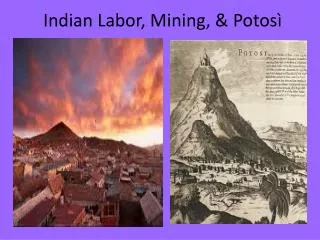
Potosì, Bolivia • 1540s = Silver boom began • 1590s = 330,000 pounds of silver ore per year • 1610 = 150,000 total residents • 1610 = 76,000 Indian residents
Mitayos • 1573 = Toledo instituted the mita • One year of work every seven years • Mita restructured to entice workers • One week on, two weeks off • Ladders