Download
1 / 5
50 likes | 170 Views
Working from home offers numerous advantages, such as freedom, saving on startup costs, and the ability to arrange work around family commitments. It also helps avoid commuting, distractions, and promotes a healthier lifestyle. However, there are notable disadvantages, including challenges in separating home and work life, initial setup costs, domestic distractions, feelings of isolation, lack of colleague interaction, minimal supervision, and potential motivation issues. Understanding these factors can help individuals make informed decisions about remote work.

E N D
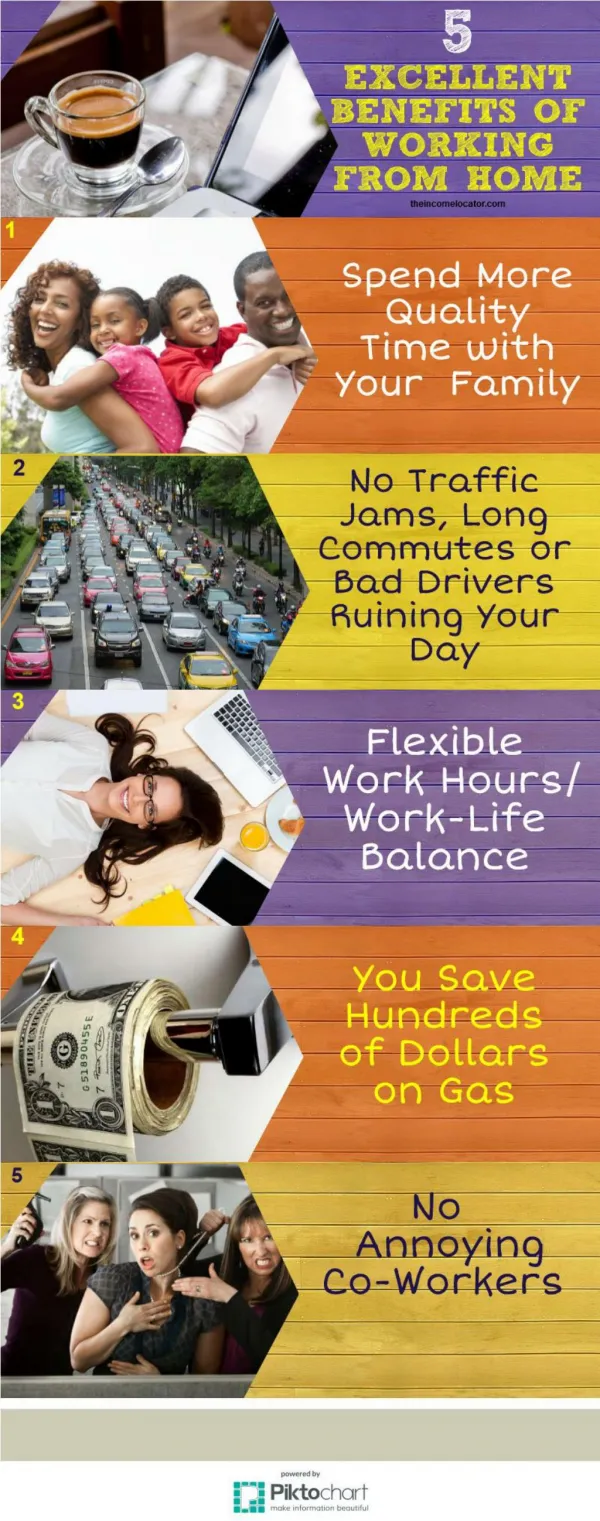
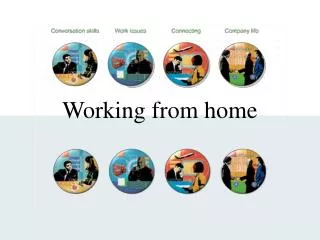
Working from home can have many advantages: • -freedom • save on start up costs, as you do not need premises • save time that would be spent on looking for suitable property • arrange work around family commitments • get help from family, eg they may help you with filing or general administration tasks • save on time and money spent travelling to work • -avoid noise and distractions of the workplace • -a healthier lifestyle However, there are disadvantages from home working, too: -separating home and work life -the initial expense of setting up -domestic distractions and interruptions -isolation/loneliness - no colleagues -lack of supervision -motivation
Like a first conditional, a second conditional sentence consists of two clauses: Conditional sentences type II If the "if" clause comes first, a comma is usually used. If the "if" clause comes second, there is no need for a comma: We use different verb forms in each part of a second conditional:
Using the second conditional if + Simple Past, main clause (would + Infinitive) The second conditional is used to talk about things which are unreal (not true or not possible) in the present or the future – things which don't or won't happen: Were instead of Was In IF Clauses Type II, we usually use were – even if the pronoun is I, he, she or it –. Example: If I were you, I would not do this.