Download
1 / 11
110 likes | 223 Views
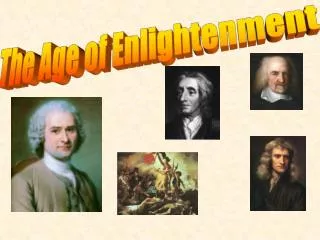
The European Intellectual Revolution: “The Enlightenment”. Readings: Smith, et al., 759-767. Enlightenment is A Product of the Scientific Revolution. If you can know the “natural” world, then you should be able to know the “social, political, economic worlds. Sir Isaac Newton was a model.

E N D
The European Intellectual Revolution: “The Enlightenment” Readings: Smith, et al., 759-767
Enlightenment is A Product of the Scientific Revolution • If you can know the “natural” world, then you should be able to know the “social, political, economic worlds. • Sir Isaac Newton was a model. • The goal was to make everyone happy.
Immanuel Kant • “What is Enlightenment” • “Don’t be Afraid to Know” • “Have Courage to Use Your Own Reason”
John Locke • Was English and lived from 1631-1704. • Two Treatises on Government: Political Liberalism and Representation. • John Locke felt that property was necessary to have a stake in the government.
Baron de Montesquieu • Was French and lived from 1689-1755. • Spirit of Laws: • Separation of Powers • Checks and Balances
Voltaire • Was French and lived from 1694-1778. • “Enlightened Despotism” • Religious Toleration
Jean-Jacques Rousseau • Was French from 1712-1778. • The Social Contract: • The General Will • Public must be generous • Make other people happy • Private happiness linked to public happiness
Emile • Education • The Woman Question • Idea of State religion: Nationalism, Patriotism
Adam Smith • The Wealth of Nations (1776) • Laissez-faire economy • Free Trade • The Invisible Hand
Jeremy Bentham • Utalitarianism • Best Policy which promotes Greatest happiness of the greatest number.
Benjamin Franklin • Poor Richard’s Almanac • Public Opinion • Coffee Houses • Newspapers • Academies • Salons