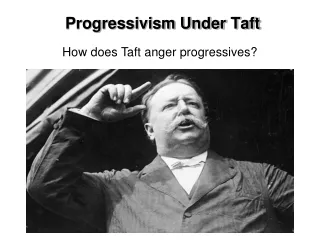
The Taft Presidency: From Progressive Hope to Controversial Betrayal
William Howard Taft, handpicked by Theodore Roosevelt to continue Progressive reforms, initially launched his presidency on a Progressive platform and won overwhelmingly. However, he soon faced criticism for betraying Progressive ideals, particularly with the Payne-Aldrich Tariff, which appeased the Republican Party but failed to lower tariffs significantly. His appointment of non-conservationists led to the sale of public lands, angering Progressives like Gifford Pinchot. The divide within the Republican Party culminated in the formation of the Bull Moose Party, with Roosevelt running as a Progressive, ultimately leading to the election of Woodrow Wilson in 1912.

The Taft Presidency: From Progressive Hope to Controversial Betrayal
E N D
Presentation Transcript
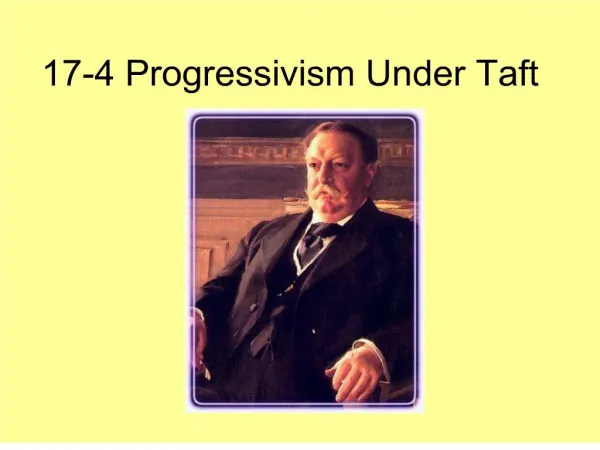
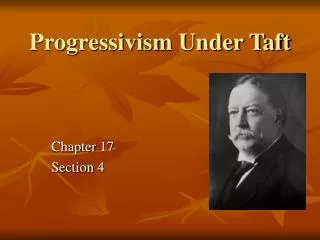
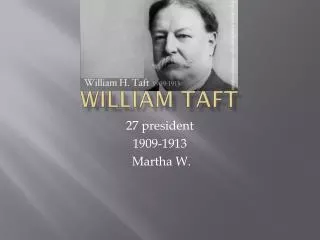
William Howard Taft • Hand picked by Roosevelt to succeed him • Ran on a Progressive Platform • Wins overwhelmingly • Betrays Progressive ideals
Tariffs • Promised to lower Tariffs once he became prez • Payne-Aldrich Tariff • Lowered tariffs on hides, canary birdseed, sea moss • Looked at as appeasing the Republican Party • Anti-Progressive
Public Lands • Appointed a non-conservationist at Sec. of Interior • Sells off Public Land to private companies • Gifford Pinchot (Roosevelt man) complains and is fired • Public sees Taft as anti-conservation
Republican Party Splits Republicans Progressive Republicans • Nominate Taft • Support of Big Biz • Support of “Old Guard” • Appealed to conservative voters • “Bull Moose Party” • Nominates Teddy • Support of progressive voters • Promoted: • Women’s suffrage • Workmen’s comp • Law against child labor
Election of 1912 • Two Republican Candidates: • Roosevelt & Taft • One Democratic Candidate • Woodrow Wilson