Download
1 / 5
50 likes | 163 Views
This presentation by Emily Bockh outlines a five-year global initiative aimed at enhancing social and behavior change communication (SBCC) in 17 countries. Led by FHI 360 in partnership with several organizations, the project focuses on developing a flexible SBCC toolkit to transfer knowledge and skills to local institutions. The initiative emphasizes long-term capacity strengthening, linking technical and organizational support to local needs, and ensuring commitment from stakeholders. Challenges include maintaining engagement and aligning various capacity strengthening approaches.

E N D
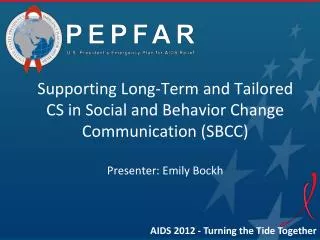
Supporting Long-Term and Tailored CS in Social and Behavior Change Communication (SBCC)Presenter: Emily Bockh
Introduction and Overview • A five-year Global Health and Development Communication Initiative (2007 - 2012) • Partners: Led by FHI 360 with Ohio University, Internews, Care, Soul City, IDEO, New Concept, and CMS • Location: Global project in 17 countries • CS goal: Strengthen and transfer social and behavior change communication (SBCC) skills and knowledge to developing country institutions
Capacity Strengthening Model • Development of modular, flexible SBCC Toolkit • Assessments and tailoring of CS TA • Work with partners to determine approach and action plan • Provide technical CS in SBCC • Try to match with a provider of organizational CS • Long-term CS (more than a short training) • Measurement of competencies and development of final action plan
Challenges & Benefits Benefits Challenges Ensuring commitment of organizations/entity to long-term CS Linking CS efforts (different approaches) with each other Ensuring there is a linkage between technical CS and organizational CS • CS approach based on and driven by needs • Flexibility of approaches allowed for audience-tailored CS • Worked through existing structures such as networks or governments