Download
1 / 2
20 likes | 190 Views
This video covers essential lab safety practices and equipment necessary for various experimental setups. Key topics include the relationship between lab procedures and required safety gear, modifications for using open flames, and the importance of cleanup. It discusses the technique of "wafting" to avoid hazards, appropriate responses to chemical exposure, and outlines the logical order of experimental design stages from hypothesis to results. Emphasis is placed on safety protocols, such as the correct way to mix acids and bases.

E N D
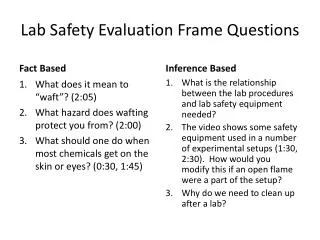
Lab Safety Evaluation Frame Questions Fact Based Inference Based What is the relationship between the lab procedures and lab safety equipment needed? The video shows some safety equipment used in a number of experimental setups (1:30, 2:30). How would you modify this if an open flame were a part of the setup? Why do we need to clean up after a lab? • What does it mean to “waft”? (2:05) • What hazard does wafting protect you from? (2:00) • What should one do when most chemicals get on the skin or eyes? (0:30, 1:45)
Final Thoughts and Generalities Place the following into the most logical order with respect to experimental design: Collect Data Publish Results Safety Hypothesis • In the lab, you may need to mix up a dilute solution from a stock solution. To do so safely, remember: • ALWAYS ADD ACID TO BASE