Cultures of the Pacific Northwest: Rich in Tradition and Diversity
The Pacific Northwest region spans 1500-200 miles long and is characterized by its rich marine and forest biome. Redwoods, cedars, and diverse marine life thrive in the surprisingly warm coastal waters. The indigenous subsistence primarily involves marine hunting and gathering. Technology is utilized to its fullest with wooden crafts like totem poles, clothing, and dugout canoes. Social organization is based around Kon villages, with clan chiefs and heritage forming leadership. Beliefs include animism, shamanism, and specialized societies. Various languages are spoken, with Athabascan, Salishan, and Wakashan being prominent. Additional aspects like potlatches and integration on the Plateau further enrich the cultural tapestry.


Cultures of the Pacific Northwest: Rich in Tradition and Diversity
E N D
Presentation Transcript
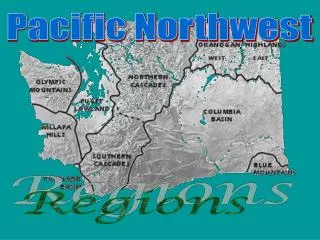
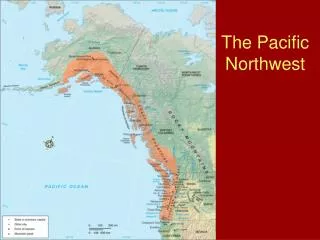
Geography • 1500-200 miles long • Only 100 miles wide • Rich marine and forest biome • Redwood and cedars common • Surprisingly warm coastal water • Bounded by coast range to the east
Subsistence • Primarily marine (H&G) • Halibut • Whale • Salmon • Sturgeon • Eulachon (smelt) aka candlefish • But also… • Otter • Seal • Deer • Bear • Mountain Goat • Other forest animals
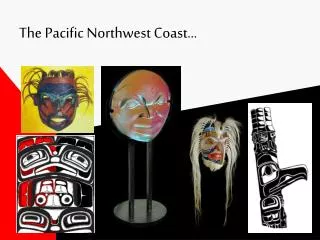
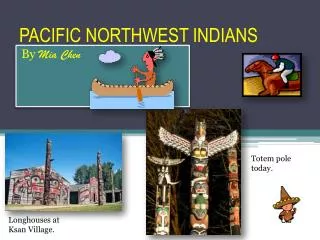
Technology • Utilized available woods to the extreme • Boxes • Totem Poles • Plankhouses • Clothing and Hats • Masks • Dugout Canoes
Social Organization • Not bands as one might expect • Dense, sedentary population • Organized at the “Kon” • Central village and its controlled area • Could conflict with same “tribe” if they were in a different Kon • Violating could lead to war, death, or slavery • Kon leadership by multiple clan chiefs • Leadership based on heritage and wealth • Leads to a ranked society
Social Organization • Further organized in exogamous clans and moieties • Matrilineal in the north • More patrilineal in the south • Moieties were Raven and Eagle (north) • Raven and Wolf in the south • Rights of access to resources to clans, personal/intellectual property to individuals • Clan property marked by totem poles, could also be erected to mark offenses (shame poles) • Homes (plankhouses) owned by the clan
Social Organization • Patrilocal and avuncolocal residency • Daily life handled at the extended household level • Clan chiefs organize their clan’s labor for major salmon runs, etc.
Beliefs • Animatism and animism common • Individuals gain power, male or female, through visions and demonstration • Shamanism only, no priests • Some specialized societies of shamans, e.g. Hamatsa cannibals • Elaborate performances
Languages • Northern: Athabascan • Central: Salishan and Wakashan (isolates) • Southern: Salishan and Penutian, some Athabascan
Additional Issues • Potlatches: Why and What • Funerary • Birth • Death • Status Change • Leveling • Redistribution • Affirmation • Alliances • Outlawed & reinstated
Plateau: area of integrations • Riverine settlement: large winter villages in the river valleys. • Diverse subsistence base: anadromous and local fish, extensive game, and root resources (camas). • Complex fishing technology: harpoons, nets, net weights, weirs, storage. • Foodsharing between groups: many groups fish one area of the river during salmon runs., through sodalities • Kinship ties between groups: intermarriage of groups in and outside of Plateau. • Large trade networks: institutionalized trading partners and regional trade fairs (Chinook trade jargon). • Limited political integration: village to village organization. • Uniform mythology and art styles: e.g., vision quest, shamanism (salmon shaman), spirit helpers for all. • Blending of traits from surrounding areas • Salish (north) and Sahaptin/Penutian (south)