Download
1 / 6
60 likes | 183 Views
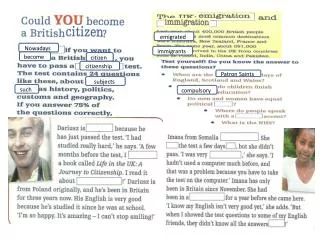
This text explores the complexities of immigration and citizenship in today’s world, emphasizing the role of patron saints in supporting new citizens. It also provides a linguistic focus on the past perfect tense, illustrating its structure and usage with examples such as “he hadn’t eaten his breakfast” and “he had written a note.” The text invites readers to reflect on their own emigration experiences, while also offering guidance on the correct use of English grammar in expressing past actions and events.

E N D
emigratedi Nowadaysi immigrantsi becomei citizeni citizenshipi PatronSaintsi subjectsi suchi compulsoryi
PAST PERFECT HAD/HADN ´T + PastParticiple When I got There, he … He hadn ´t eatenhisbreakfast He´dspiltthemilkonthetable He´dopenedthewindow He´dwritten a note He hadn ´t readthenewspaper He´dburntthetoasts He´dleftthe grill on He´dbroken a glass
What is missing here? Often Now Last year While For before Has worked Speaks Are using Went Hadn ´t travelled Was Had Went learnt Studying like
Introduce yourself whereabouts