Download
1 / 5
50 likes | 165 Views
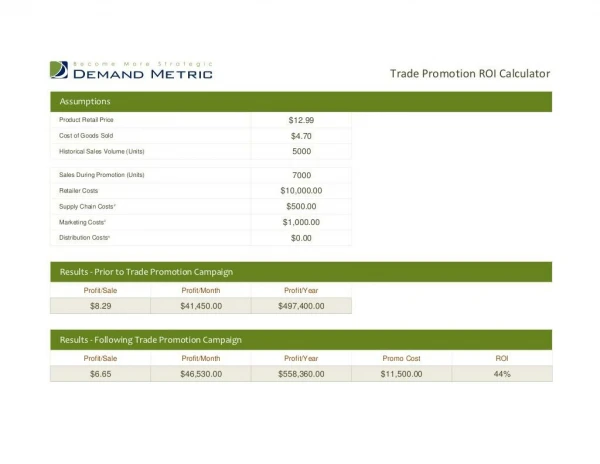
In this insightful analysis, Ted Mitchell explores how to effectively optimize promotion expenses by using Return on Investment (ROI) as a central metric. The discussion highlights the impact of marketing efforts on a firm's profits across different periods, illustrating that a seemingly small reduction in marketing can significantly affect profit margins. By understanding how costs and profits fluctuate from one period to the next, businesses can make informed decisions that improve their overall financial performance. This approach challenges conventional thinking, emphasizing the importance of strategic marketing investment.

E N D
Using ROI to Optimize Promotion Expense Ted Mitchell
Change the paradigm to a single firm changing its costs and profits from period 1 to period 2 A $75 reduction in profit due to less marketing effort is not popular Period 1 looks better than period 2
Change the paradigm to a single firm changing its costs and profits from period 2 to period 3 A $75 reduction in profit due to less marketing effort is not popular Period 1 looks better than period 2
Change the paradigm to a single firm changing its costs and profits from period 2 to period 3
Change the paradigm to a single firm changing its costs and profits from period 2 to period 3