Exploring Neanderthal Origins, Biology, and Culture: Insights into Their Life and Evolution
90 likes | 217 Views
This overview delves into the Neanderthals, suggesting they evolved from Heidelbergensis in Northern Europe around 300,000-200,000 years ago. With robust physical adaptations for cold climates, they showcased unique features like larger noses and cranial shapes accommodating slightly larger brains than modern humans. Their hunting tactics included cooperative strategies focused on large game, using sophisticated stone tools but showing little innovation over time. Symbolically, evidence hints at a culture rich in pigments and potential trade. Their social structures were likely small and localized, with enigmatic practices regarding language and burial customs.


Exploring Neanderthal Origins, Biology, and Culture: Insights into Their Life and Evolution
E N D
Presentation Transcript
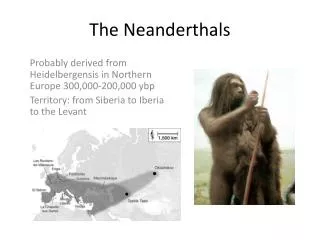
The Neanderthals Probably derived from Heidelbergensis in Northern Europe 300,000-200,000 ybp Territory: from Siberia to Iberia to the Levant
Neanderthal Physics • Cold adapted: short, stocky, thick boned • 5’6’’; 176, females somewhat smaller, 20% heavier per pound relative to humans • Trinkaus study: 50% physical overlap with Hss; Hss more derived
Neanderthal Physics • Faces: larger nose; higher browridge; longer, lower cranium; larger teeth and jaws
Neanderthal brains • Slightly larger than human (1425cc vs. 1350) • Enlarged erectus brain • Relative parietal expansion in humans
Neanderthal hunting • Varied diets, but large big game meat consumers • Cooperative hunting (100,000-50,000 ybp) Mauran, Le Borde, CombeGrenal, and La Cotte (below) • No projectile weapons; thrusting spears, close-in ambush hunting; little evidence of long-range hunting expeditions or intercept strategies • Rodeo rider injuries, tough life
Neanderthal tools • Mousterian; Levollois points/flakes; plan ahead cognition; more specialized than Heidelbergensis tool kit • Mostly stone; rarely bone or antler • Little evidence of innovation; procedural strategies; practical, repairable toolkits • Hafting points onto spears • Local, little evidence of “exotic” raw material or trade
Neanderthal symbolism? • Frequent use of pigments. For what purpose? Processing of hides, hunting camo; adhesives; selectivity for color suggest more than just practical • Beads; Chatelperronian controversy (borrowed from Cro-Magnons?) • Recent finds in Spain earlier than HssAt Cueva de los Aviones (3 peforated shells), CuevaAntón (1 shell); 50,000 ybp • Tata engravings 70,000 ybp
Neanderthal social life • Homogenous population est. 70,000 in Europe at 40,000 ybp • Smaller less organized campsite • Smaller hearths, possible no communal use of fire • Smaller social groups; no trade; local face-to-face interactions • Possibly little gender specialization; longer gestation period >12months? • Burials inconclusive regarding ritual; afterlife beliefs, etc.
Neanderthal language Some language but how much?