Commissioning a New Beginning in HIV Prevention: Opportunities and Challenges in England
On February 20, 2014, this discussion outlines the new architecture in commissioning HIV prevention services across England. It addresses the opportunities and challenges faced by local authorities, NHS England, and clinical commissioning groups as they assume new responsibilities in promoting integrated health and social care. Key focal points include enhancing community health, reducing sexual ill health, improving care quality, and fostering collaboration among various stakeholders. The session aims to identify common ground in achieving better health outcomes while navigating the evolving landscape of healthcare commissioning.

Commissioning a New Beginning in HIV Prevention: Opportunities and Challenges in England
E N D
Presentation Transcript
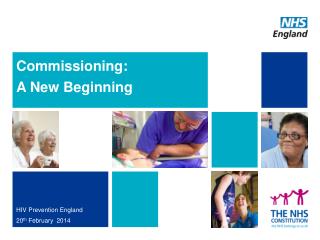
Commissioning: A New Beginning HIV Prevention England 20th February 2014
For discussion • New beginning – is it? • The new architecture - what do we need to know? • Opportunities and challenges • Commissioning goal – common ground
New beginning or next chapter? • New organisations: HWBB, Clinical Senates • New responsibilities: duty to promote integrated health, social care and ‘health related services’ around the needs of service users • New cultures, new ways of working And • Some things remain the same • Continued focus on reducing sexual ill health and promoting good health • Increasing need for improved quality and reduced cost
The architecture • Local authorities – responsible for prevention services for local populations • NHS England – responsible for commissioning primary care (including dental etc.), health in the justice system, military health, screening programmes • NHS England – responsible for commissioning prescribed specialised service through provider based commissioning for all eligible England patients • Clinical commissioning groups (CCGs) – supported by commissioning support units - responsible commissioning community and acute care for local populations
Challenges and Opportunities • Relationships • Flexibilities • Responsibilities • Governance • Cultures • Innovation and change • Targets • The money
Common ground • Reduce ill health and improve good health • Improve outcomes and experience for people and populations • Service redesign solutions • Ensure safe and appropriate services available • Deliver roles and legal responsibilities • Deliver savings and value for money • Duties around partnership and integration
Shared agendas • Reducing new infections (and arrangements for PEPSE , consideration of TasP and PrEP) • Expanding testing and earlier diagnosis • Quality standards • Clinically appropriate care • Innovation and new models of care • Cost efficient care • Personal responsibility and self management • Service user experience and co-production
Making the new arrangements work The allegory of the long spoons…