Understanding Protein Synthesis: Translation, Codons, and Ribosomes
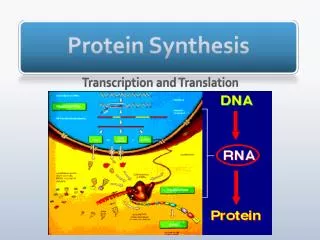
This overview of protein synthesis focuses on the translation process, elucidating key concepts such as codon-anticodon matching and the role of transfer RNA (tRNA) and ribosomes in forming peptide bonds. It explains how a codon corresponds to an amino acid, the significance of wobble for tRNA pairing, and the stages of translation in ribosomes, including the peptidyl site, aminoacyl site, and exit site. Additionally, the description covers protein processing, the function of signal peptides, and the importance of protein destination in cellular functions.

Understanding Protein Synthesis: Translation, Codons, and Ribosomes
E N D
Presentation Transcript
Protein Synthesis Translation
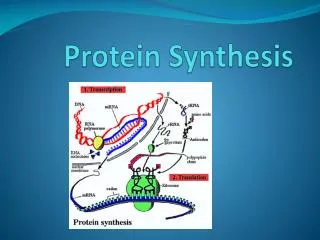
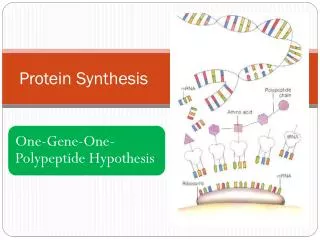
Translation Overview One codon One amino acid
Ribosomes • Peptide bond • formation • Codon-anticodon • matching
T A C G G C A A A C T C C G G A C T A U G C C G U U U G A G G C C U G A A T G C C G T T T G A G G C C T G A Transcription/Translation
E P A A U G G A A C C A A U G C C G U U U U A G G C C U G A Peptidyl Site Met Phe Pro Exit Site Aminoacyl Site
E P A G A A G A C A U G C C G U U U U A G G C C U G A Met Pro Phe Pro
Wobble • Only 45 different tRNA molecules exist • Pairing of the anticodon with the third base of the codon is less specific
Protein Processing • Ribosome type depends on ultimate destination of polypeptide
Protein Processing • Signal peptide region • ~ 20 peptides at start of PPChain • Binds to SRP as rest of PPChain is translated • Signal Recognition Particle • Carries whole translation complex to ER membrane • PPChain is fed into cisterna
DNA Function Review • What are the three sites in a ribosome? • Spliceosome:Intron::_____:_____ • How is location of translation related to the eventual use of its product? • What is wobble?