Download

1 / 7
80 likes | 229 Views
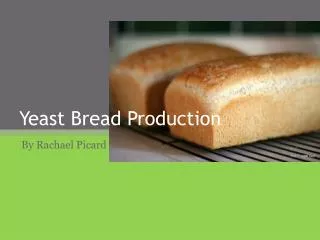
Discover the intricate process of bread production at Warburtons. Flour is delivered in tankers and stored in silos, with batches of dough mixed every few minutes using computer-controlled systems. Ingredients like yeast and salt are added automatically, shaping dough into balls that can produce 8,000 loaves per hour. The dough undergoes resting and proving processes, followed by baking in ovens for 20-25 minutes. After cooling and quality checks, freshly sliced bread is packaged and distributed to ensure you enjoy top-notch quality.

E N D
Bread production at Warburtons www.warburtons.co.uk
Flour arrives in tankers at the bakery and is stored in silos Typically holding 50 tonnes of sifted flour. Computer-controlled mixer weighs flour and water. Batches of dough are mixed every few minutes. Yeast, salt and other ingredients are added automatically.
Batches of dough are divided into portions for 400g or 800Conical moulders shape dough into balls to produce 8000 loaves per hour. g loaves at a speed of 125 loaves per minute. Conical moulders shape dough into balls to produce 8000 loaves per hour. First prover allows dough to 'rest' for 6-8 minutes.
Panner moulder shapes dough for final product Dough spends 50 minutes in final prover and expands in controlled humidity and temperature. Bread travels through the oven for 20-25 minutes. Lids are added to some tins to produce flat-topped bread. 6000 large or 8000 small loaves are baked per hour.
Lids and pans removed before cooling for 2-3 hours in the cooler. The bread is sliced and regular samples are taken away to be inspected to ensure quality is maintained. Bread is packaged, stacked and put onto lorries for distribution.
Understanding how bread rises When yeast (block or dried) is mixed with water and sugar it becomes frothy. The yeast cells multiply, this process is called fermentation. Fermentation stops if the water/dough is too hot or cold or if there is no sugar.
Yeast mixture or dried yeast is added to flour, water and other ingredients, kneaded and placed in a loaf tin. Carbon dioxide gas is produced by the yeast within the dough forming pockets which makes the dough rise in the warmth. This process is called proving. The loaf tin is put in the oven, the heat kills the yeast and cooks the dough leaving a 'risen' loaf.