Download
1 / 11
110 likes | 222 Views
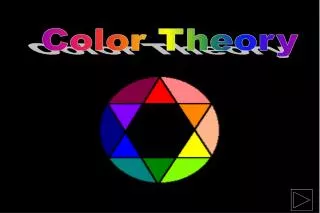
Dive into the principles of color theory with this guide on various color schemes. Explore monochromatic colors, where shades and tints of a single color create harmony. Understand complementary colors, which sit opposite each other on the color wheel, like red and green. Learn about analogous color schemes, featuring colors next to each other, and triadic schemes, which utilize evenly spaced colors. Finally, discover the split-complementary scheme, a variation that includes the base color and its adjacent complements for dynamic designs.

E N D
Monochromatic Monochromatic: The shades and tints of 1 color (tints-lighter by adding white or water and shades created by adding black or a complement)
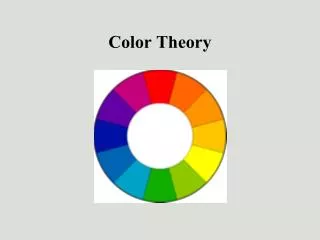
Complementary Complementary Colors that are opposite each other on the color wheel are considered to be complementary colors (example: red and green).
Analogous Analogous color schemeAnalogous color schemes use colors that are next to each other on the color wheel.
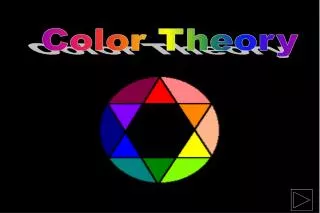
Triadic • Triadic color scheme A triadic color scheme uses colors that are evenly spaced around the color wheel.
Split-Complementary Split-Complementary color scheme The split-complementary color scheme is a variation of the complementary color scheme. In addition to the base color, it uses the two colors adjacent to its complement.