Protein Synthesis
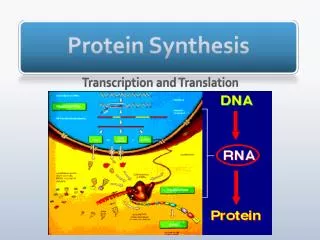
This overview covers the fundamental processes of protein synthesis including transcription and translation, demonstrating how genetic information is converted into functional proteins. Early research by Archibald Garrod, George Beadle, Edward Tatum, and Vernan Ingram laid the groundwork for the one gene-one enzyme hypothesis. This concept highlighted the relationship between genes and the enzymes they produce, specifically relating to genetic disorders such as alkaptonuria and sickle cell anemia. Additionally, it discusses the roles of different types of RNA in synthesizing proteins from genetic templates.

Protein Synthesis
E N D
Presentation Transcript
Protein Synthesis An Overview
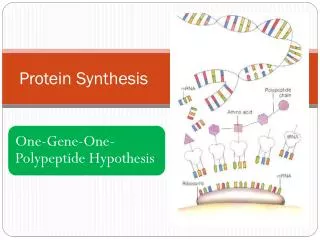
Archibald Garrod • British physician from the 20th century • Studied patients withalkaptonuria • A genetic disorder whichcauses black urine,containing alkapton • Garrod’s Hypothesis: • one gene directs theproduction of one enzyme • A defective enzymecauses an “inborn error ofmetabolism” which resultsin the inability to breakdown alkapton • Enzymes are controlled by heretic material • An error in heretic material meant an error in an enzyme
George Beadle and Edward Tatum • Represented the relationship explain by Garrod through experiments on red bread mould, Neurosporacrassa • One strand of the mould was able to synthesize all theamino acids and vitamins it needed foroptimum growth, given minimum nutrients • Mutant strains were created using X-raysand UV lighting and were not able toreplicate with minimum nutrients • 4 mutant strains were discovered, eachhad a different defective gene • Beadle and Tatum concluded that onegene acts by directing the production of only one enzyme • Their hypothesis is known as the one gene-one polypeptide hypothesis
Vernan Ingram • Studied the amino acid sequence of hemoglobin from individuals with sickle cell anemia • Discovered a base switch in one of the polypeptides • The switch caused achange in the structureof the red blood cell • Ingram’s research showedthat a gene specifies thekind and location of aminoacids in polypeptide chains • Ingram linked heretidy abnormality to a single alteration in the amino acid sequence of a protein
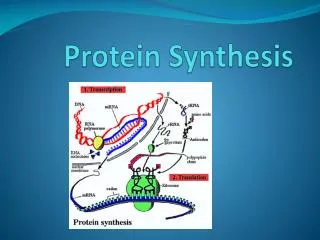
Central Dogma • Genes are expressed in the phenotype of an individual • Two parts: Transcription & Translation • Moves in one direction: gene protein • More than one protein is made per gene, therefore multiple copies must be made • The desired template sequence of DNA is copied (transcription) then made into a polypeptide chain (translation) • DNA RNA Protein
Ribonucleic Acid (RNA) • Contains a ribose sugar (remember: DNA has a deoxyribose sugar) • Contains Uracile, whichpairs with Adenine, instead of Thyamine • RNA is only ever insingle-stranded form • There are 3 kinds of RNA • mRNA: messenger RNA • tRNA: transfer RNA • rRNA: ribosomal RNA
Ribonucleic Acid (RNA) • mRNA • Sequence of base pairs transcribed from DNA • tRNA • Transfers the appropriate amino acids to the ribosome to build proteins • rRNA • A structural component that forms a ribosome
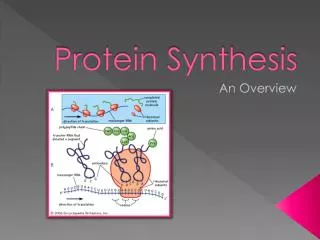
Transcription VS Translation • Initiation • Ribosome recognises mRNA • Elongation • Amino acids are strung together • Termination • Stop codon is reached, polypeptidechain isreleased • Initiation • RNA polymerase binds to promoter region • Elongation • Building of mRNA by adding RNA nucleotides • Termination • The mRNA is finished when stop signal is reached
The Genetic Code • Nucleotides are grouped in threes • Each triplet is called a codon • Four bases, in triplets give us 43 = 64 possible combinations • Each codon codes for 1/20 amino acids • Since there are 20 amino acids and 64 possible codons, multiple codons code for the same amino acids • AUG is the start codon, whereas UAA, UAG, and UGA are stop codons