Download
1 / 2
0 likes | 149 Views
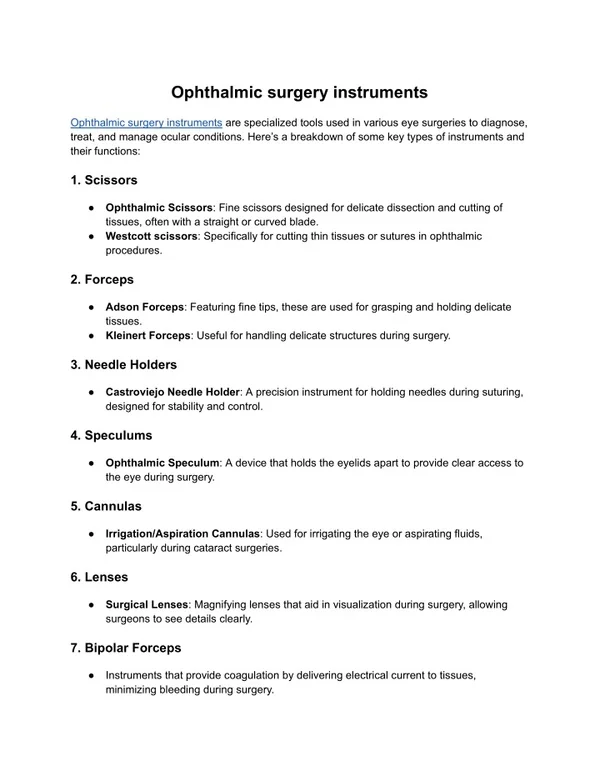
Ophthalmic surgery instruments<br>Ophthalmic surgery instruments are specialized tools used in various eye surgeries to diagnose, treat, and manage ocular conditions.

E N D
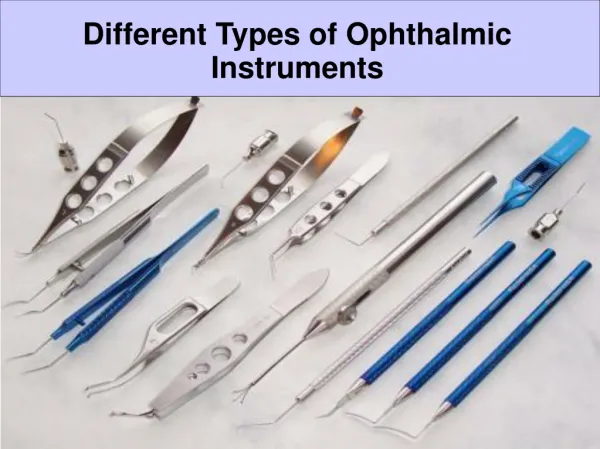
Ophthalmic surgery instruments Ophthalmic surgery instruments are specialized tools used in various eye surgeries to diagnose, treat, and manage ocular conditions. Here’s a breakdown of some key types of instruments and their functions: 1. Scissors ● Ophthalmic Scissors: Fine scissors designed for delicate dissection and cutting of tissues, often with a straight or curved blade. Westcott scissors: Specifically for cutting thin tissues or sutures in ophthalmic procedures. ● 2. Forceps ● Adson Forceps: Featuring fine tips, these are used for grasping and holding delicate tissues. Kleinert Forceps: Useful for handling delicate structures during surgery. ● 3. Needle Holders ● Castroviejo Needle Holder: A precision instrument for holding needles during suturing, designed for stability and control. 4. Speculums ● Ophthalmic Speculum: A device that holds the eyelids apart to provide clear access to the eye during surgery. 5. Cannulas ● Irrigation/Aspiration Cannulas: Used for irrigating the eye or aspirating fluids, particularly during cataract surgeries. 6. Lenses ● Surgical Lenses: Magnifying lenses that aid in visualization during surgery, allowing surgeons to see details clearly. 7. Bipolar Forceps ● Instruments that provide coagulation by delivering electrical current to tissues, minimizing bleeding during surgery.
8. Grafts and Tacks ● ● Scleral Tacks: Used in specific procedures to hold tissues in place. Grafts: Various types may be utilized for corneal or retinal surgeries. 9. Retinal Instruments ● ● Endolaser Probes: For laser treatments within the eye. Retinal Detachment Instruments: Specialized tools for managing retinal conditions. Key Considerations ● Material: Most instruments are made from stainless steel or titanium for durability and sterility. Design: Instruments are often designed with ergonomic handles for precision and comfort during lengthy procedures. ● These instruments are essential in ophthalmic surgeries such as cataract removal, retinal repairs, and corneal transplants, providing the precision and control needed for delicate eye procedures.








![OPHTHALMIC SURGERY INSTRUMENTS [SURGICOSE]](https://cdn4.slideserve.com/8061795/medical-instruments-medical-instruments-dt.jpg)