Download

1 / 35
0 likes | 3 Views
Data science is an interdisciplinary field that combines math, statistics, programming, and domain expertise to extract insights and drive decisions from data. Yale IT Skill Hubu2019s Data Science course in Coimbatore offers hands-on training in Python, R, machine learning, and data visualization, with real-world projects, expert mentors, and 100% placement support for tech careers.

E N D
The Importance and Future of Data Science By Smrithi M 02-06-2025 https://yaleinfotech.com/course/best-data-science-course-in-coimbatore/
CONTENTS 1. Understanding Data Science 2. Why Data Science Matters 3. Applications of Data Science 4. The Role of the Data Scientist 5. Data Science in Business: Driving Value 6. The Future of Data Science 7. How to Become a Data Scientist 8. Challenges in Data Science 9. The Data Science Ecosystem: Tools and Technologies 10. Data Science: A Career of the Future 11. Learning Data Science: The Importance of Professional Training 12. Data Science Course at Yale IT Skill Hub, Coimbatore
01 Understanding Data Science
Definition 1 Data science is a multidisciplinary field that leverages statistics, mathematics, computer science, and domain expertise to extract knowledge and insights from structured and unstructured data. 2 At its core, data science involves gathering data, analyzing it, and using the results to inform decision-making and predict future trends.
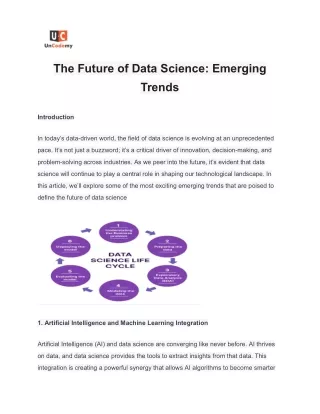
The Data Science Lifecycle 1 2 3 4 5 Problem Definition Data Collection Data Preparation Exploratory Data Analysis Model Building Understanding the business or research question. Gathering data from various sources such as databases, web logs, or user interactions. Cleaning, transforming, and organizing data into a usable format. Identifying patterns, trends, and anomalies in the data. Applying statistical and machine learning algorithms to extract insights or make predictions. 6 7 8 Evaluation Deployment Communication Assessing the accuracy and effectiveness of models. Integrating models into production systems for real-world use. Presenting findings to stakeholders in a clear and actionable manner.
02 Why Data Science Matters
Importance Data science is often compared to a treasure hunt—searching for valuable insights hidden within vast amounts of data. The explosion of digital data from devices, social media, and online transactions has made data science essential for organizations seeking to remain competitive.
Key Benefits of Data Science 1 2 Informed Decision-Making Predictive Analytics Data science enables organizations to base decisions on evidence rather than intuition, leading to more reliable outcomes. By analyzing historical data, businesses can forecast trends, customer behavior, and potential risks. 3 4 Operational Efficiency Personalization Identifying inefficiencies and optimizing processes through data-driven insights. Tailoring products, services, and marketing to individual customer preferences. 5 Automation Streamlining repetitive tasks and processes using machine learning and artificial intelligence.
03 Applications of Data Science
Industry Use Cases Healthcare Finance Retail and E-commerce Transportation Predicting disease outbreaks, personalizing treatment plans, and optimizing resource allocation. Credit scoring, fraud detection, and algorithmic trading. Route optimization, demand forecasting, and self-driving vehicles. Recommendation systems, inventory management, and customer segmentation. Manufacturing Digital Marketing Gaming Internet Search Predictive maintenance, quality control, and supply chain optimization. Targeted advertising, customer behavior analysis, and campaign optimization. Enhancing user experience and engagement through data-driven game design. Improving search engine results and enabling voice-activated technologies.
04 The Role of the Data Scientist
Responsibilities 1 A data scientist is a professional who combines expertise in machine learning, statistics, programming, and domain knowledge to find patterns and extract insights from data. 2 Their responsibilities include: •Asking the right questions to define business problems. •Collecting and exploring data from diverse sources. •Cleaning and transforming data for analysis. •Applying statistical and machine learning techniques. •Interpreting results and communicating findings to stakeholders.
Essential Skills for Data Scientists Programming Skills Statistical Knowledge Machine Learning Skills Proficiency in languages like Python, R, and SQL. Understanding probability, hypothesis testing, and statistical modeling. Knowledge of algorithms for classification, regression, clustering, and deep learning. Data Visualization Skills Big Data Knowledge Communication Skills Ability to present insights using tools such as Tableau, Power BI, or Matplotlib. Familiarity with Hadoop, Spark, and cloud-based data processing. Translating technical results into actionable business insights.
05 Data Science in Business: Driving Value
Business Strategy Data science is a cornerstone of modern business strategy. Companies use data science to: •Make Informed Decisions: Data scientists uncover insights that help management make evidence-based decisions, optimizing strategies and operations. •Define Actionable Goals: By analyzing customer data and market trends, businesses can set specific, measurable objectives aligned with their vision. •Identify Opportunities: Data science techniques like clustering and predictive modeling reveal new market opportunities, potential products, and areas for growth. •Test Hypotheses: A/B testing and predictive analytics allow businesses to evaluate strategies before full-scale implementation, reducing risk and improving outcomes.
Real-World Example Netflix, for instance, leverages data science to enhance its recommendation system, driving user engagement and retention. By analyzing viewing habits and preferences, Netflix delivers personalized content, keeping users satisfied and loyal.
06 The Future of Data Science
Trends Importance of Data Science AI Advancements Rising Demand Artificial intelligence and machine learning are becoming more sophisticated, enabling deeper insights and more powerful automation. As a result, the demand for skilled data scientists continues to rise across all sectors. With the proliferation of digital devices and the exponential growth of data, the importance of data science will only increase.
07 How to Become a Data Scientist
Educational Pathways 1 Undergraduate Degree: A bachelor’s degree in computer science, statistics, mathematics, or a related field is a common starting point. 2 Advanced Degrees: A master’s or Ph.D. can provide deeper knowledge and open doors to specialized roles.
Developing Key Skills Programming Statistical Methods Machine Learning Master Python, R, and SQL for data manipulation and analysis. Learn to apply statistical techniques for hypothesis testing and data modeling. Gain hands-on experience with frameworks like TensorFlow, PyTorch, and Scikit-Learn. Data Visualization Big Data Tools Use tools to present insights clearly and effectively. Familiarize yourself with Hadoop, Spark, and cloud platforms.
Building Experience Projects Internships Certifications Work on real-world data science projects to apply your skills. Gain practical experience through internships or industry collaborations. Consider earning certifications to validate your expertise and improve employability.
08 Challenges in Data Science
Issues Despite its immense potential, data science presents several challenges: •Data Quality: Incomplete, inconsistent, or inaccurate data can hinder analysis. •Data Privacy: Ensuring the ethical use and protection of sensitive information is critical. •Skill Gaps: The rapid evolution of technologies creates a constant need for upskilling. •Interpretability: Communicating complex findings to non-technical stakeholders requires clarity and precision.
09 The Data Science Ecosystem: Tools and Technologies
Essential Tools Data science relies on a robust ecosystem of tools and technologies, including: •Programming Languages: Python, R, SQL •Data Visualization: Tableau, Power BI, Matplotlib, Seaborn •Machine Learning Libraries: Scikit-Learn, TensorFlow, PyTorch •Big Data Platforms: Hadoop, Spark •Database Systems: MySQL, PostgreSQL, MongoDB •Cloud Services: AWS, Google Cloud, Microsoft Azure
10 Data Science: A Career of the Future
Opportunities Harvard Business Review famously called data science the "sexiest job of the 21st century." The field offers lucrative salaries, diverse opportunities, and the chance to make a meaningful impact. Data scientists are in high demand across industries, from technology and finance to healthcare and government.
Career Paths in Data Science Data Analyst Machine Learning Engineer Data Engineer Focuses on interpreting data and generating reports. Builds and maintains data pipelines and infrastructure. Designs and implements machine learning models. Business Intelligence Analyst Research Scientist Translates data into actionable business insights. Advances the state of the art in data science and AI.
11 Learning Data Science: The Importance of Professional Training
Structured Training Given the breadth and complexity of data science, structured training programs are invaluable. These programs provide a blend of theoretical knowledge, practical skills, and industry exposure, preparing students for real-world challenges.
12 Data Science Course at Yale IT Skill Hub, Coimbatore
Course Overview Institute Overview Career Placement Focus Data Science Course Yale IT Skill Hub, located in Coimbatore, is a leading institute offering instructor-led courses in Python, Java, Data Science, Software Testing, Digital Marketing, and Full Stack Development. Since 2015, it has focused on career placement, integrating project simulations, internships, and coaching support into its programs. The Data Science course at Yale IT Skill Hub is designed for both students and professionals, providing expert-led sessions in Python, machine learning, data visualization, and analytics. Curriculum Structure Graduate Benefits The curriculum is tailored to industry needs, ensuring participants gain practical experience through hands-on projects and flexible learning options. Graduates benefit from strong placement support, making it an ideal choice for launching or advancing a data-driven career in Coimbatore.
Conclusion In summary, Yale IT Skill Hub’s Data Science course stands out for its comprehensive, industry-focused approach. With experienced instructors, real-world projects, and robust career support, the program equips learners with the essential skills to thrive in the fast-growing field of data science. Whether you are starting your journey or seeking to upskill, Yale IT Skill Hub provides the resources and guidance needed to succeed in today’s data-driven world. Website: https://yaleinfotech.com/course/best-data-science-course-in-coimbatore/