Roman Republic
Explore the complex history of the Roman Republic and Empire, including pivotal events such as the Punic Wars, the rise of consuls, and the eventual transition to imperial rule. Key figures like Julius Caesar, the Gracchi brothers, and Augustus shaped the political landscape, while legal reforms like the Law of the Twelve Tables and societal divisions between patricians and plebeians defined Roman society. Delve into notable cultural contributions, including Livy's historical accounts and Virgil's "The Aeneid," as well as the impact of Christianity and the Byzantine Empire's legacy.

Roman Republic
E N D
Presentation Transcript
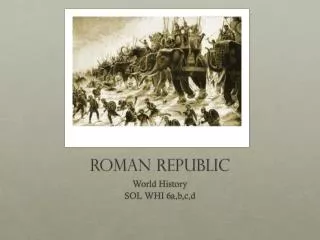
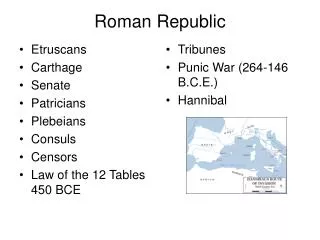
Etruscans Carthage Senate Patricians Plebeians Consuls Censors Law of the 12 Tables 450 BCE Tribunes Punic War (264-146 B.C.E.) Hannibal Roman Republic
Proconsuls Gracchi Brothers Sulla Julius Caesar (d. 44 BCE) First Triumvirate: Crassus- Pompey- Julius Caesar Second Triumvirate: Octavian (Augustus Caesar)- Lepidus- Mark Antony
Cleopatra Octavian (Augustus Caesar) “Princeps” Principate 27 BCE-14 CE Pax Romana Livy Tiberius Villa Virgil 70-19 BCE The Aeneid Marcus Aurelius 161-180 CE The Meditations
Commodus r. 180-193 “Barracks Emperors” Praetorian Guard Diocletian (r. 294-305) Tetrarchy Constantine 313-337 Constantinople Christianity/Fall of Rome
Jesus Saul of Tarsus (Paul) 6-67 CE Second Diaspora Franks Saxons Angles Vandals Visigoths Ostrogoths Barbarian Invasions:
Justinian (ruled 400-788) Byzantine Empire (around 550): Corpus Juris (533) Procopius (Secret History) “Greek Fire” Byzantine Empire 400-788
The “Justinian Plague” Constantinople (Istanbul) Hagia Sophia Theodora
Polis “The silk Road to China” Gracchi Brothers Misogyny Athena Aphrodite Patria Potestas Lex Juliana 18 BCE Galley Slaves Classical Life