Download
1 / 5
50 likes | 162 Views
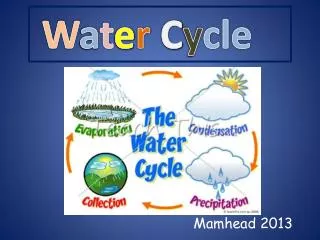
This informative piece explores the essential stages of the water cycle: evaporation, condensation, and precipitation. It describes how water evaporates from liquid to gas through the sun's heat, condenses into clouds as temperatures drop, and finally precipitates back to Earth in various forms such as rain, snow, and sleet. The processes are illustrated with examples such as seeing condensation on a cold drink during a hot day. Additionally, it highlights the importance of ground water for plants and animals, along with the need for clean drinking water for people.

E N D
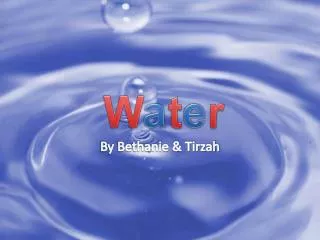
WaterCycle Mamhead 2013
EVAPORATION Water evaporates from a liquid to a gas. The sun heats the earths water and we only see it as steam. It happens very quick on a hot day. Mamhead 2013
Condensation When water vapour in the air gets to the cold it turns from gas to liquid. That is called condensation. All the raindrops form a cloud. You can see condensation when you get a cold drink can on a hot day and water drips down the can. Mamhead 2013
PRECIPITATION Precipitation is when water falls from the clouds into lakes rivers streams and oceans. It falls to the ground as rain snow hail or sleet . Rain may fall to the ground in a light sprinkle or heavy down pour. Mamhead 2013
collection Water falls as precipitation and may fall in oceans, lakes or the ground. Ground water is water in the soil. Plants absorb the water from the ground. Animals drink water from dirty lakes and puddles. People drink clean water. Mamhead 2013